


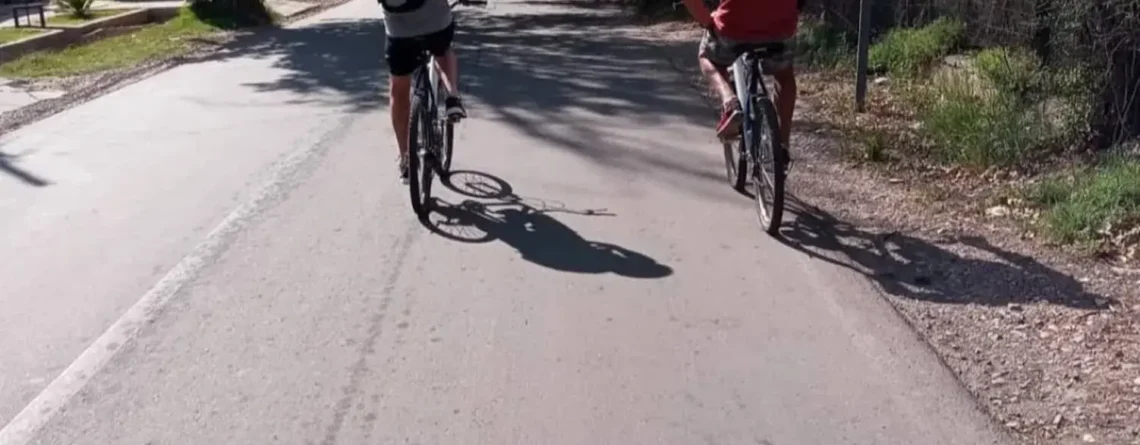
Traffic on the Maipú Wine Route: what it’s really like and how to ride safely
Traffic on the Maipú Wine Route: what it’s really like and how to ride safely
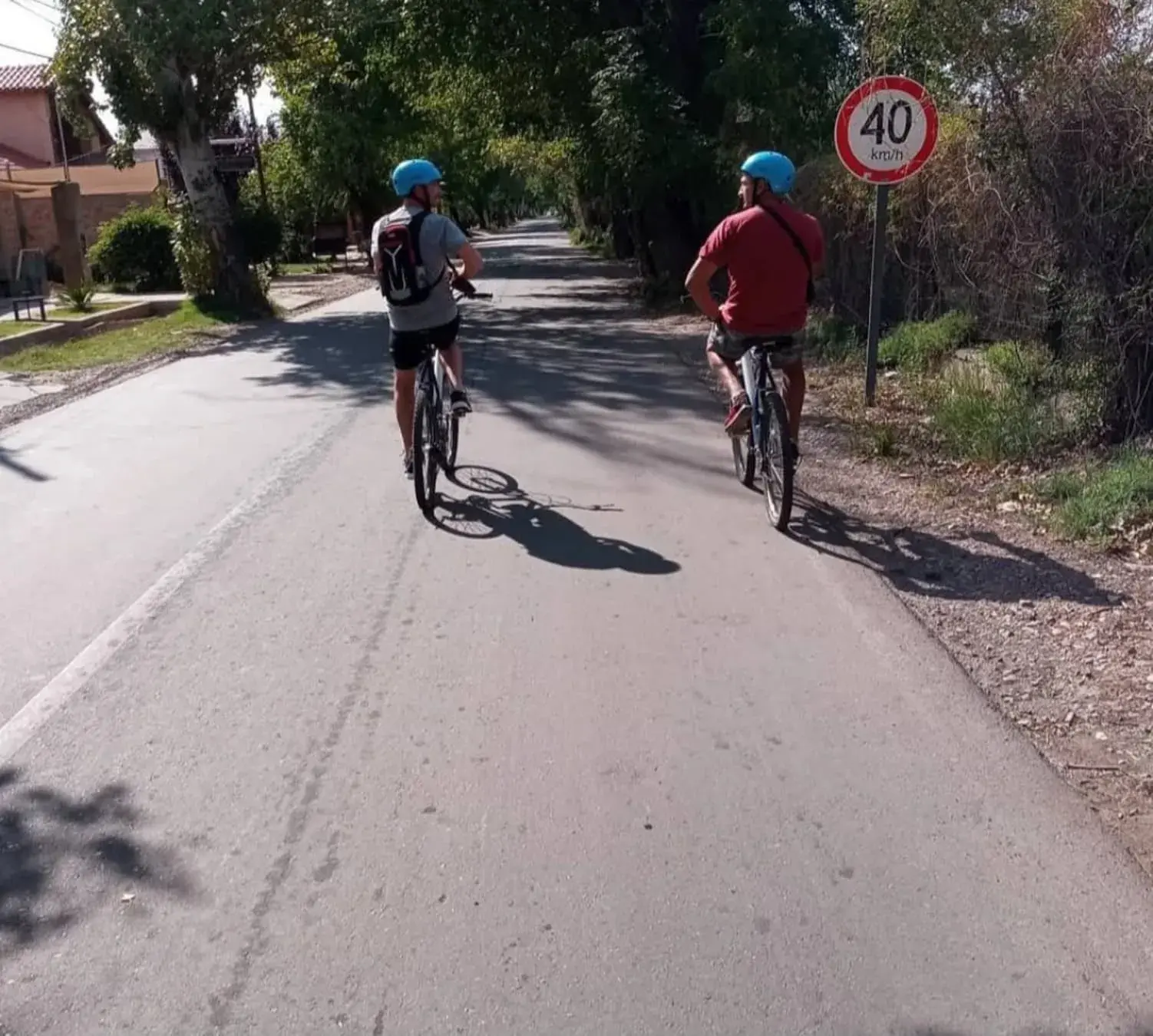
Before getting on a bike, many people ask us about traffic on the Maipú Wine Route. The honest answer is this: it’s not a remote country lane among vineyards, but it’s not chaos either. It’s a lively area, with houses, schools, shops and wineries, where people come and go every day.
Over the day you’ll ride between 12 and 16 km, depending on the stops you choose. You’ll use bike lanes and roads you share with cars, buses, trucks and, now and then, a tractor. With a few clear rules, you can ride it calmly. Here’s what you’ll find and how to get around safely.
What traffic on the Maipú Wine Route is really like, unfiltered
Maipú is one of the districts of Greater Mendoza. Coquimbito, the area where the ride starts, has a life of its own: neighbors going to work, kids leaving school, delivery drivers and farms in full swing. The wineries are right in the middle of all that.
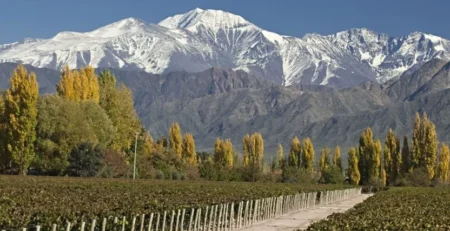
The photos on social media show vineyards, olive groves and the Andes. All of that is there. What they usually don’t show is that, a few meters away, there’s a road. This is what you’ll come across:
- Private cars: locals, and also visitors touring the wineries by car or taxi.
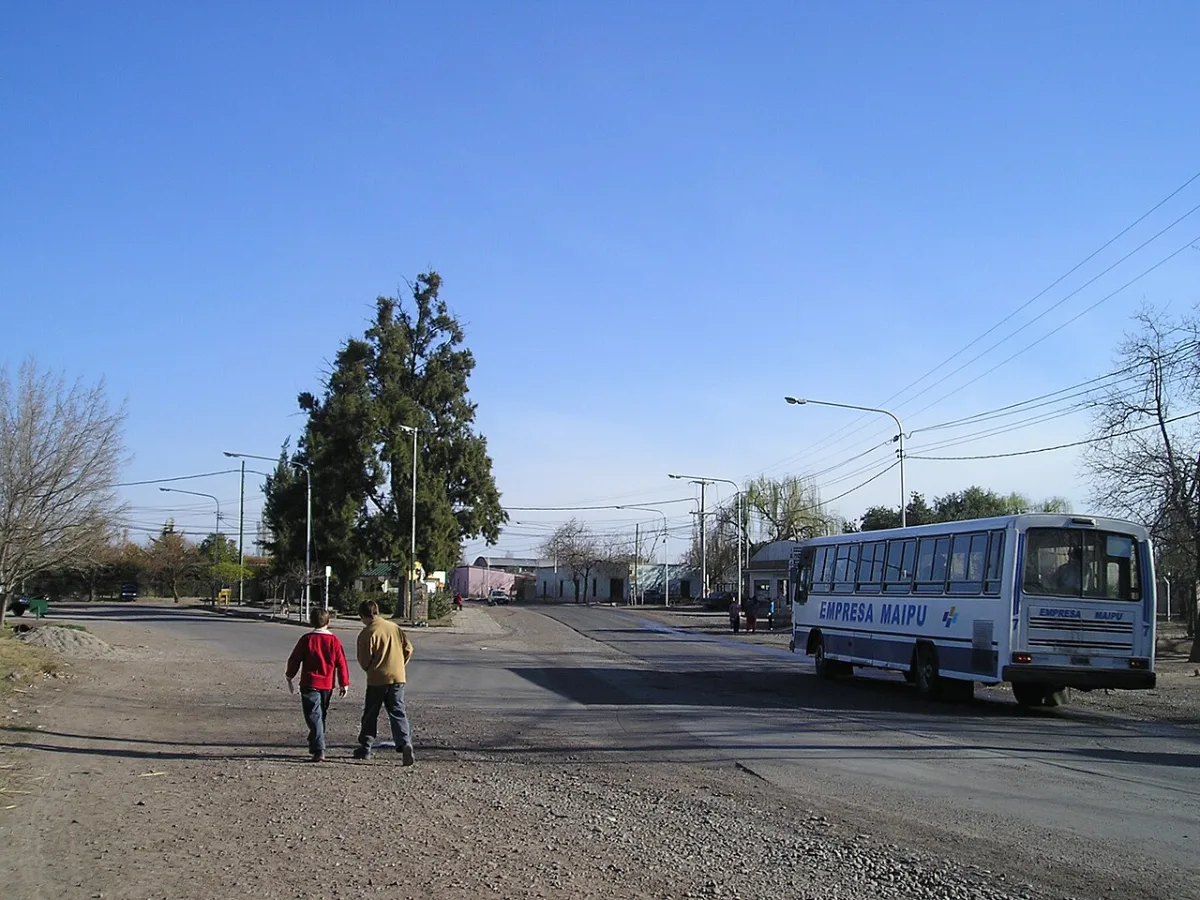
- Buses: public transport lines that stop at shelters by the roadside.
- Trucks: delivery trucks, winery trucks and, during harvest, trucks loaded with grapes.
- The odd tractor: slow and quite wide.
- Motorbikes, other bikes and pedestrians, especially near shops.
None of this is unusual for those who live here. The idea is that you know before you set off, so you ride alert and without surprises.
Bike lane and shared road: the two kinds of stretch
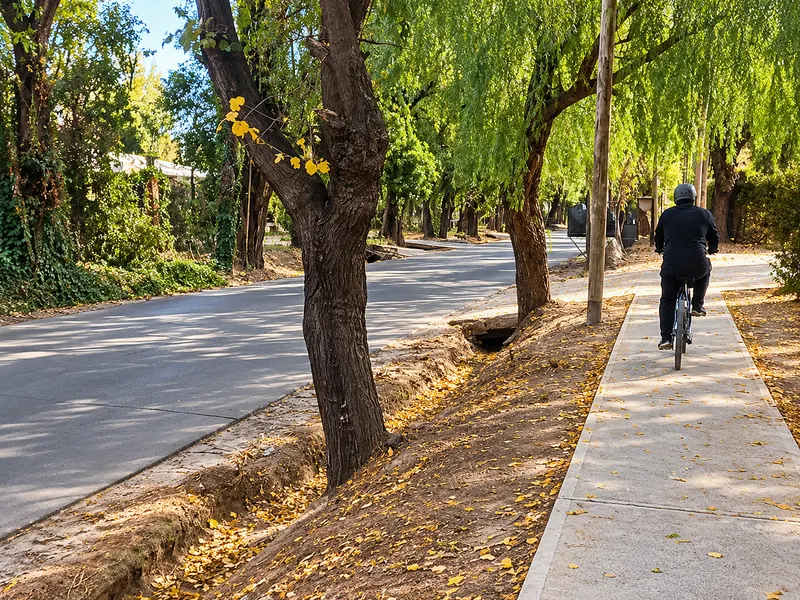
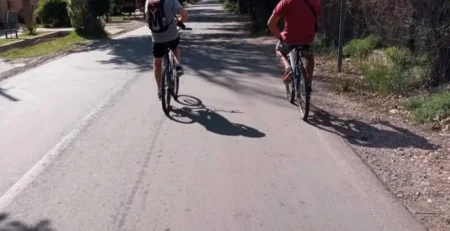
The route combines two very different situations. Some stretches have a bike lane: a lane for bikes separated from cars, sometimes by a curb. On others, the bike goes on the road, close to the right edge, with traffic passing alongside.
Often, on bike-lane stretches, you have the road on one side and an acequia on the other: the irrigation channel that runs along almost every street in Mendoza. It isn’t deep, but a moment’s distraction can send you in. If you want to know more, we have a humorous guide to Mendoza’s acequias.
Shared roads are the ones that need the most attention. They don’t have a wide shoulder everywhere, and cars pass close. There, the golden rule is to ride single file and well to the right. Telling these two kinds of stretch apart is half the secret to handling traffic on the Wine Route.
Ciclovía, bicisenda and ciclocarril: how to recognize each one
In Mendoza you’ll hear three words that sound the same but aren’t. Knowing them helps you read the map and know how much space you have on each stretch.
- Ciclovía (bike lane): a lane only for bikes, separated from cars by a curb, dividers or a strip. It’s the most comfortable stretch.
- Bicisenda (bike path): a path for bikes off the roadway, for example in a park or next to the sidewalk. It’s often shared with pedestrians.
- Ciclocarril (painted lane): a strip painted on the road itself, with no physical separation. Cars pass very close, so it’s best to ride almost as you would on a shared road.
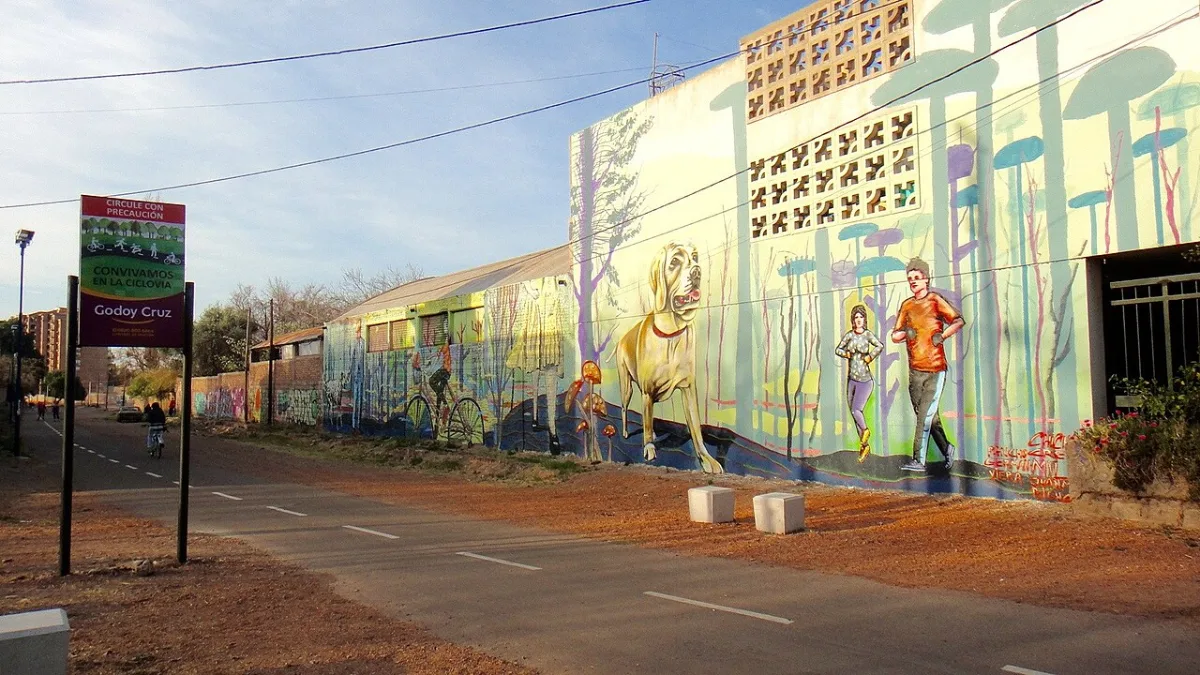
The Mendoza government has been expanding the bike-lane network in the metropolitan area, which according to its figures reaches almost 350 km including municipal and provincial stretches. That network is mainly designed for getting around the city. In traffic on the Wine Route you’ll find stretches with a bike lane and others without, so don’t assume you’ll always have your own space.
Traffic on the Wine Route, stretch by stretch
This table sums up what you’ll find on each type of stretch and how best to ride.
| Type of stretch | What you’ll find | How to ride |
|---|---|---|
| Bike lane | Bike lane, other cyclists and, often, an acequia alongside | Ride in the middle of the lane, single file, and call out before passing another cyclist |
| Shared road | Cars, motorbikes, buses and trucks passing close | Well to the right, single file, no weaving and signaling every move |
| Crossings and intersections | Vehicles turning and poor visibility | Brake, look both ways and, if in doubt, walk your bike across |
| Winery entrances | Cars, vans and sometimes trucks coming in and out | Slow down and make eye contact with the driver |
| Bus stops | Buses braking, opening doors and pulling away again | Wait behind or pass with plenty of room, never on the right |
| Harvest (February to April) | More grape trucks and tractors | Give them space, don’t ride close behind and avoid their blind spots |
Harvest: more trucks between February and April
If you travel in late summer, you’ll arrive in the middle of the harvest. In Mendoza, the grape harvest is generally concentrated between February and April, although dates vary by year and grape variety.
During those weeks, traffic on the Wine Route adds grape trucks and tractors going from the farms to the wineries. They’re large vehicles, slow to brake and with wide blind spots. A few tips for that time of year:
- If a truck or tractor is coming up behind you, hold your line on the right and let it pass.
- Don’t ride close behind a truck or alongside it when it turns.
- If a tractor is ahead, wait for a straight, clear stretch before passing, or simply follow it calmly.
The harvest is a beautiful time to visit Maipú. You just need a bit more patience.
The rules for riding safely
In Argentina, National Traffic Law 24.449 requires cyclists to wear a helmet, and in Mendoza Road Safety Law 9024 applies. The Mendoza government sums up its official recommendations for cycling: an approved helmet, keeping to the right, hands on the handlebars and riding with no alcohol in your blood. Building on that, these are our rules for handling traffic on the Wine Route:
- Helmet on and fastened from the moment you leave until you get back. It comes with the bike.
- Single file, one behind the other. Riding two or three abreast while chatting takes up the lane and forces cars to pass very close.
- Always on the right, both in the bike lane and on the road.
- Signal with your arm before turning or braking, so the rider behind knows what you’re going to do.
- Phone away while you ride. To check the map, take photos or reply to messages, stop and pull over.
- Take care when crossing. Brake, look both ways and, if needed, walk across with the bike beside you.
- Watch out at winery entrances. Cars, vans and sometimes trucks come in and out there.
- If you’ve had too much, don’t ride. Walk the bike, drink water, eat something and wait. At tastings you don’t need to finish every glass.
- Head back in good time: bikes must be returned before 6 pm.
Times and weather: when it’s best to ride
You can head out until 2:30 pm, so you have time to ride without rushing and be back before 6 pm. Returning in daylight also makes you more visible in traffic on the Wine Route. From 4:30 to 6 pm the Free Malbec Wine Happy Hour awaits you at our shop, to end the day with the bike already returned.
The weather counts too. If it rains, the ride is rescheduled or canceled. When there’s a Zonda wind alert we don’t go out: we let you know and find another date. In summer the sun is strong, so bring water, a cap and sunscreen. In this guide we explain what to bring to tour the wineries of Maipú by bike.
What Maipu Bikes does about traffic on the Wine Route
At Maipu Bikes, bike rental on the Maipú Wine Route in Mendoza, we’ve welcomed travelers since 2009: more than 81,000 so far. The ride is self-guided, so you go at your own pace, but you don’t head out blind.
- We explain the route map before you leave: which way to go, where there are bike lanes and where to cross with extra care.
- We give you safe directions based on the wineries in the circuit you want to visit and the time you have.
- Basic 26-inch MTB, checked before every ride.
- Helmet included, always.
- Mechanical assistance during the ride, in case of a flat tire or if something fails.
This guide focuses on what the traffic is like and how to ride. If your question is more general, read our article on whether it’s safe to cycle between wineries. And if you prefer the humorous version, there’s our guide to surviving (in style) Mendoza traffic.
FAQ about traffic on the Maipú Wine Route
Is the Maipú Wine Route a country lane through vineyards?
Not quite. There are vineyards, olive groves and views of the Andes, but the route runs along streets with houses, shops and real traffic: cars, buses, trucks and the odd tractor.
Is there a bike lane along the whole route?
No. There are stretches with a bike lane and stretches of shared road, where you ride along the right edge. Before you leave, we show you on the map which is which.
Is a helmet mandatory?
Yes. National law and Mendoza law require it for cycling. At Maipu Bikes the helmet is included with the rental.
Can I ride after the tastings?
Mendoza authorities recommend riding with no alcohol in your blood. If you feel you’ve had too much, don’t ride: walk the bike, rehydrate and wait. You can taste without finishing every glass.
When are there more trucks?
During the harvest, which generally runs from February to April. In those weeks there are more grape trucks and tractors on the road.
What happens if there’s Zonda wind or rain?
With a Zonda alert we don’t go out and we let you know. If it rains, the booking is rescheduled or canceled.
How many kilometers do you ride?
Between 12 and 16 km over the day, depending on the wineries you choose. The terrain is mostly flat.
Do you need experience for the ride?
You just need to ride a bike comfortably: start, brake, hold your line and signal with one arm. If you haven’t ridden in years, try it for a few minutes before heading onto the road.
To wrap up
Traffic on the Maipú Wine Route is nothing mysterious: it’s the traffic of a place where people live and work. With a helmet, single file, on the right and with your phone away, you’ll enjoy the ride from start to finish. The wineries, lunch and the sunset do the rest.
Ready to ride the Wine Route?
Both experiences are self-guided: you head out with a bike, helmet, map and directions to get around safely in traffic on the Maipú Wine Route. Book online and pay at our shop.
Self-Guided Wine Bike Tour
Self-guided rental
Bike, helmet, map and mechanical assistance. You choose your stops within the Maipu Bikes circuit and, if any of them requires a booking, we send you the link. Tastings and meals are paid separately. When you get back, the Free Malbec Wine Happy Hour is waiting for you.
Maipu Wine Bike Experience
Itinerary with coordinated bookings
You follow a set itinerary and we coordinate the bookings: Trapiche, Entre Olivos, Viña El Cerno and a multi-course lunch at Mevi. Bike, helmet and assistance included. At the end, the Free Malbec Wine Happy Hour.



Deja una respuesta