



Argentina Entry Requirements and Getting to Mendoza: a Guide for Foreign Tourists
Argentina Entry Requirements and Getting to Mendoza: a Guide for Foreign Tourists
Before you start dreaming of vineyards and mountains, it’s worth sorting out the practical side: which document you’ll enter with, whether you need a visa and how you’ll get to Mendoza. In this guide we bring together the Argentina entry requirements for tourists, explained for people who have never been to the country, with links to the official sources.
Important: immigration rules change. Use this guide to get your bearings and always confirm your case with the National Directorate of Migration or the Argentine consulate in your country before buying your tickets.
Argentina entry requirements: which document you need
It depends on your nationality:
- Most travelers: a valid passport. It’s recommended that it be valid for at least six months from your date of entry.
- Citizens of Mercosur and associated countries (Brazil, Bolivia, Uruguay, Paraguay, Chile, Peru, Venezuela, Ecuador and Colombia): besides a passport, they can enter with a valid national ID card or another travel document accepted under the regional agreements.
Physical document, digital version or photo: which one works
- At the border, only the original physical document is valid. A photo of your passport on your phone or a photocopy won’t replace it.
- Digital versions in apps aren’t valid for crossing. For example, for Argentines, the DNI in the Mi Argentina app is not valid at border control: you have to show the physical document.
- Photos and copies are useful as a backup, though: if you lose your document, they help you file the police report and handle the paperwork at your consulate.
Do you need a visa to travel to Argentina?
If you’re traveling for tourism with a valid ordinary passport, you can enter Argentina without applying for an Argentine visa if your passport is from one of these countries. The usual stay is up to 90 days, as granted by Migration on arrival.
- Europe: Germany, Austria, Belgium, Bulgaria, Czechia, Cyprus, Croatia, Denmark, Slovakia, Slovenia, Spain, Estonia, Finland, France, Greece, Hungary, Ireland, Iceland, Italy, Latvia, Liechtenstein, Lithuania, Luxembourg, Malta, Norway, the Netherlands, Poland, Portugal, the United Kingdom, Romania, Sweden and Switzerland.
- Americas: Canada, the United States, Mexico, Brazil, Chile, Uruguay, Paraguay, Bolivia, Colombia, Ecuador, Peru, Costa Rica, El Salvador, Guatemala, Honduras, Nicaragua and Panama.
- Asia: Japan, South Korea, Singapore, Israel, Malaysia and Thailand.
- Africa and Oceania: South Africa, Australia and New Zealand.
Mainland China: if you hold an ordinary Chinese passport and a valid US visa of an accepted category, such as a B2 tourist visa, you can enter without an Argentine visa or an AVE (electronic travel authorization). The Foreign Ministry also states that a US permanent resident card (Green Card) is accepted. If you have neither of these documents, ask the Argentine consulate which procedure applies before you travel.
If you have dual nationality, the rules of the passport you present apply. For other passports or special cases, check the consular visa regime, Resolution 316/2025 and the information on the Green Card.
How long you can stay and how to extend your stay
According to Migration, a tourist is a foreigner who enters the country to rest or sightsee, with an authorized stay of up to three months, extendable for a similar period.
- Extension: apply at the National Directorate of Migration before your original stay expires.
- If you overstay: anyone who stays longer than authorized may be fined and have to complete an exit authorization procedure. Don’t leave it until the last day.
- The tourist category is for tourism: working or studying requires a different type of permit.
Is health insurance one of the Argentina entry requirements?
Decree 366/2025 amended the Migration Law: when requesting entry, foreigners must declare that they have health insurance. That declaration becomes enforceable once the rule is regulated, so check with Migration how it applies at the time of your trip.
Whatever the rule says, travel insured: outside emergencies, public hospitals can charge for care to people without coverage. In our guide to travel insurance for Argentina we explain what it should cover.
What happens at immigration control
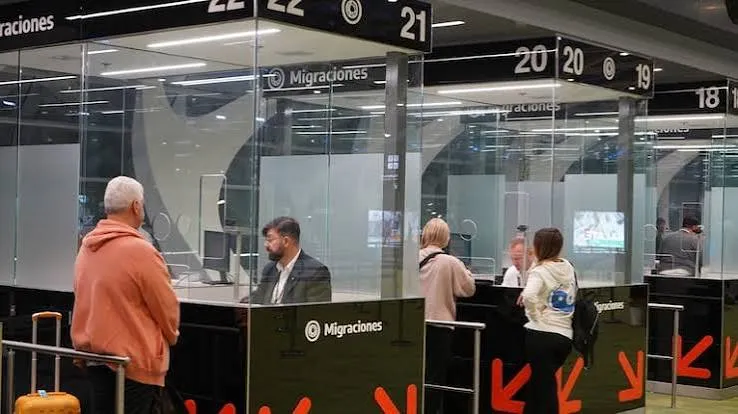
At the airport or the border crossing you’ll go through two checks: Migration, which checks your document and records your entry, and Customs, which checks what you carry in your luggage. In some cases you may be asked where you’ll be staying, how long you plan to stay or which places you’ll visit. Having your first accommodation booking and your onward ticket at hand speeds everything up. The authorities may also ask you to show sufficient funds for your stay, although in practice most tourists aren’t asked. Keep everything that proves you meet the Argentina entry requirements at hand, just in case.
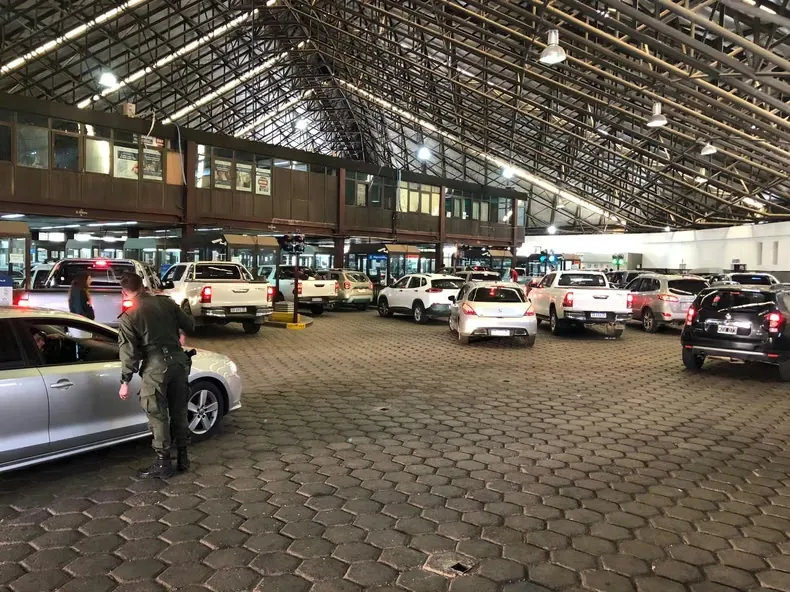
Plant and animal food products are also checked. And if you arrive in Mendoza overland, there’s also the provincial sanitary barrier, which doesn’t allow fruit and vegetables that could carry the fruit fly. We explain it in detail in our guide to crossing from Santiago to Mendoza.
How to get to Mendoza: all the options
Mendoza doesn’t have just one gateway. Choose according to where you’re coming from and how much time you have.
| How | From where | Keep in mind |
|---|---|---|
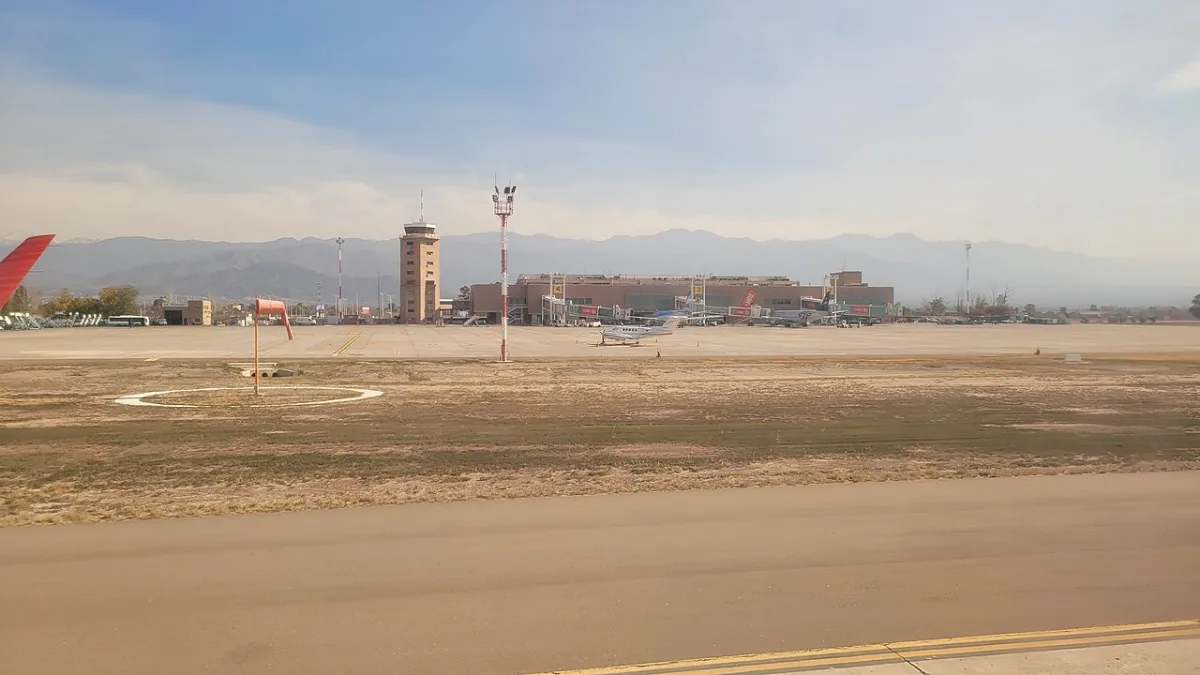
| Plane | Buenos Aires and other Argentine cities; also international flights, such as from Santiago de Chile | You arrive at Governor Francisco Gabrielli International Airport (El Plumerillo), about 15 to 20 minutes from downtown. It’s the fastest option. |
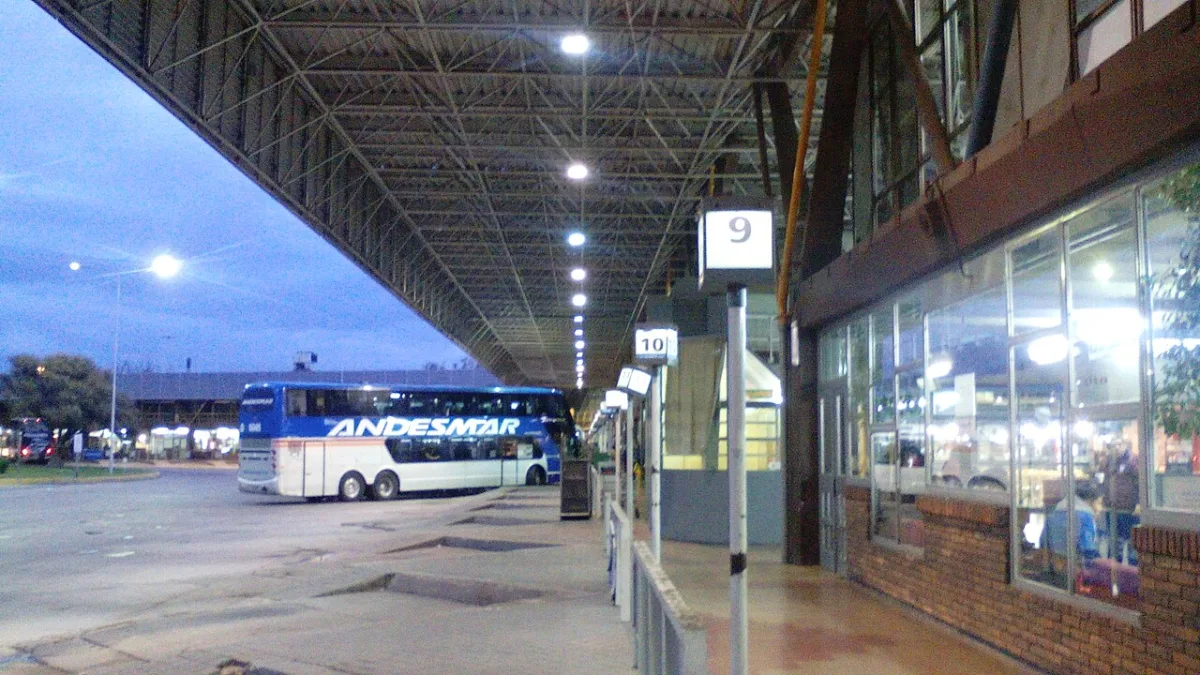
| Long-distance bus | Almost every Argentine province and Santiago de Chile | There are cama and semicama (fully and partly reclining seat) services for overnight trips. They arrive at Terminal del Sol. |
| Car (your own or rented) | Other provinces or Chile | Crossing the border requires specific documents and insurance. |
| Campervan or motorhome | Long trips through Argentina and Chile | The rental company’s border-crossing permit, fuel and authorized places to stay overnight. |
| Transfer or private shuttle | Santiago or nearby cities | Check that it’s licensed for international trips. |
From the airport you can continue by taxi, remis (private car service), ride-hailing apps, transfer or rental car.
Once in Mendoza, the Maipú Wine Route is very close to downtown. We explain how to get to the Maipú Wine Route from downtown Mendoza.
How to look after your documents and belongings
- Take photos of your passport and of the page with your entry stamp, and save them on your phone and in the cloud.
- On your daily outings, if you don’t need it, leave your passport somewhere safe at your accommodation and carry a copy.
- Keep documents, cards and phone in a backpack or bum bag close to your body, not in back pockets or bike baskets.
- Write down the phone number and address of your embassy or consulate in Argentina.
- If you lose your document or it’s stolen, report it to the police (in an emergency, call 911) and contact your consulate for a replacement document.
Argentina entry requirements: quick checklist before you travel
- Valid passport (or ID card, if you’re from Mercosur or an associated country).
- Visa or AVE, only if your nationality requires it.
- Booking for your first accommodation and an onward or return ticket.
- Travel health insurance.
- A plan for paying: we explain how in our guide to Argentina’s currency for tourists.
- Connectivity on arrival: see our guide to SIM cards for tourists in Argentina.
- An adapter if your plugs are different: we explain it in power outlets and voltage in Argentina.
Frequently asked questions about the Argentina entry requirements
Do I need a visa to enter Argentina as a tourist?
It depends on your nationality. More than 120 nationalities can enter without a visa; others must apply for a tourist visa or, in some cases, an AVE. Confirm it on the official Migration list. Once you’ve met the Argentina entry requirements, the most important thing is not to lose your passport during the trip.
How many days can I stay as a tourist?
Up to three months, with the option of requesting an extension for a similar period from Migration before your stay expires.
Can I enter with my national ID card?
Yes, if you’re a citizen of a Mercosur or associated country and your ID card is valid. All other travelers need a passport.
Is a photo or copy of my passport enough?
Not for entering or leaving the country: the original document is required at the border. Copies are useful as a backup if you lose it.
What’s the best way to get to Mendoza?
Flying is the fastest. The bus is the cheapest option from other provinces and from Santiago. A car gives you more freedom to explore the region.
Is health insurance mandatory to enter Argentina?
Decree 366/2025 establishes that foreigners must declare, when requesting entry, that they have health insurance. It becomes enforceable once it’s regulated; check the official Migration information before you travel. Either way, traveling with insurance is highly recommended.
What document do I need to rent a bike in Mendoza?
Your passport or a valid ID document is usually enough to register the rental.
Read also
Papers in order? Time to ride
Both Maipu Bikes experiences are self-guided: you get a bike, a map and recommendations, and you explore the Wine Route at your own pace. With the Argentina entry requirements sorted, the best part of the trip is still ahead.
Self-Guided Wine Bike Tour
Self-guided rental
Bike, helmet, map and mechanical assistance. You choose your stops within the Maipu Bikes circuit and, if any of them requires a booking, we send you the link. Tastings and meals are paid separately. When you get back, the Free Malbec Wine Happy Hour is waiting for you.
Maipu Wine Bike Experience
Itinerary with coordinated bookings
You follow a timed itinerary and we coordinate the bookings: Trapiche, Entre Olivos, Viña El Cerno and a tasting-menu lunch at Mevi. Bike, helmet and assistance included. At the end, the Free Malbec Wine Happy Hour.






Deja una respuesta