


Zonda Wind: A Guide to Surviving Mendoza’s Apocalypse (in Style)
Zonda Wind: A Guide to Surviving Mendoza’s Apocalypse (in Style)
Everything you need to survive the Zonda if it shows up during your trip to Mendoza, explained with humor (and a couple of serious bits).
You came to Mendoza for the wine, the mountains and the sunsets. You did everything right: checked the weather, booked the bike, planned your winery route. All under control.
Then a local looks up at the sky, narrows his eyes and says quietly, like someone announcing a prophecy: “The Zonda is coming tomorrow.”
You have no idea what that means, but judging by his face, it’s not a friend.
Relax, it’s not your fault. Back home, wind just passes by. In Mendoza, wind arrives: with its own name, an official alert and a family WhatsApp group in full crisis mode.
What is the Zonda? An expert explains
We asked Fernando Jarilla: bachelor’s degree in Gusts, honorary doctorate in Airborne Dust, master’s in Cancelled Plans and third cousin of our star weatherman, Fernando Jara. He is named after the toughest shrub in Mendoza’s desert, the jarilla, which puts up with the Zonda all year without a hair out of place.
(Disclaimer: Fernando Jarilla doesn’t exist. His cousin does.)
According to Jarilla, it’s simple: “Air comes in from the Pacific, full of moisture. It hits the Andes and has to climb. As it rises, it cools and drops all its water on the Chilean side, like a sponge being wrung out. When it comes down on our side, it arrives dry and heats up on the way down, like on a slide. Result: heat, strong wind, dust and an entire province closing its windows.”
The Zonda’s season and strength
When does it show up? “Between May and November, almost always in the afternoon. It lasts a few hours, and sometimes it comes and goes for two or three days. And it always says goodbye the same way: with a south wind and a sudden cold snap.”
If the Zonda were a movie, it would be a co-production between Gone with the Wind and Twister: the epic drama of the first with the special effects of the second. The difference is that cows don’t fly here: plastic chairs, shopping bags and your neighbor’s laundry do. And it isn’t a tornado: it doesn’t spin, it just pushes. A lot.
How strong is it? On September 24, 2026, there was an orange alert across almost the whole province, Maipú included, with gusts of over 90 km/h (56 mph). That’s the speed of a car on the highway. A bike rolling through the vineyards goes about 15 km/h. The Zonda moves six times faster than you, and it doesn’t even use its turn signal.
How to tell it has arrived
The first step to survive the Zonda is recognizing it:
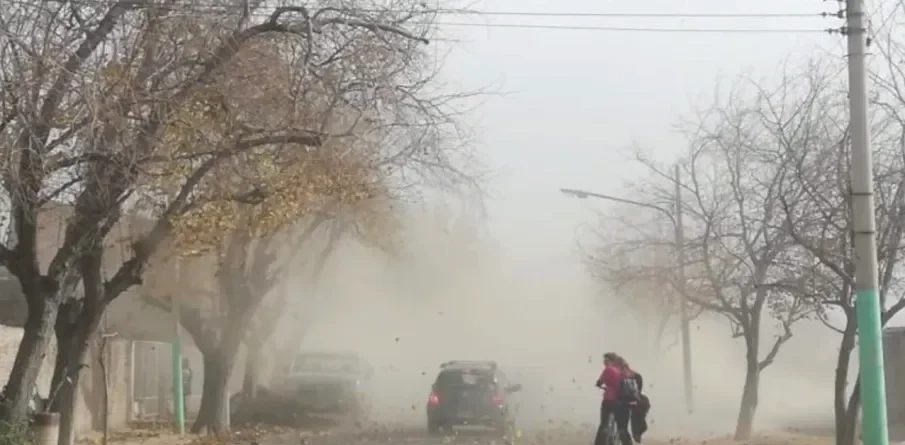
- The sky turns a shade of sepia no Instagram filter can copy. Your photos will look like they were taken in 1974.
- Your hair develops a personality of its own and makes decisions without asking you.
- At 10 a.m. it was 12 °C. At 3 p.m. it’s 30 °C. Nobody told you winter had an “express summer” button.
- Everything gives you static shocks: the car door, the railing, your partner. You pet a dog and the dog hates you a little too.
- Locals cancel plans with admirable calm: “Shall we meet today?” “No, there’s Zonda.” And that’s that.
People here call that state “estar zondeado” (being “Zonda-ed”), and it works as a universal excuse. Late? Zonda. Picked the wrong wine? Zonda, obviously. And the official line of every Argentine aunt: “My blood pressure dropped.” No arguments.
Mendoza’s apocalypse in five phases
Mendocinos (or menducos, as we affectionately call ourselves) are calm people. We sit through earthquakes without getting out of our chairs. But the Zonda transforms us.
- The prophecy. Someone shares the forecast in the family group, and within ten minutes the whole province turns into meteorologists. Your neighbor compares three weather apps as if they were election polls. But in the end everyone asks the same thing: “And what did Jara say?”
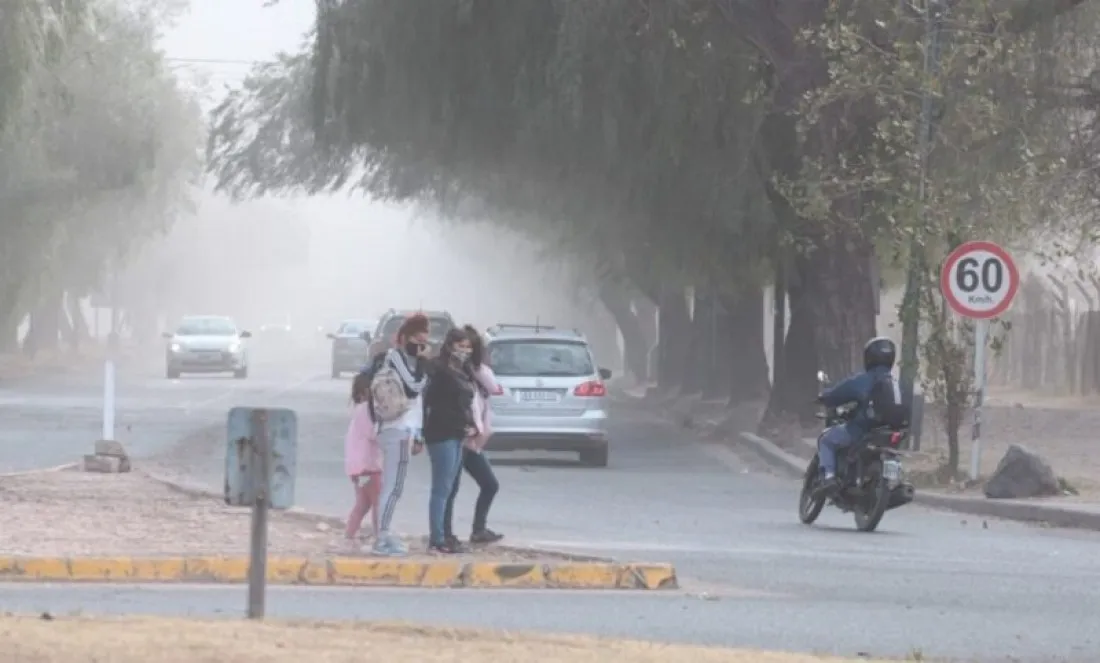
- The preparation. Bunker mode: windows shut, laundry inside and the car parked far from the most suspicious tree on the block. If schools close, kids celebrate as if Argentina had won the World Cup.
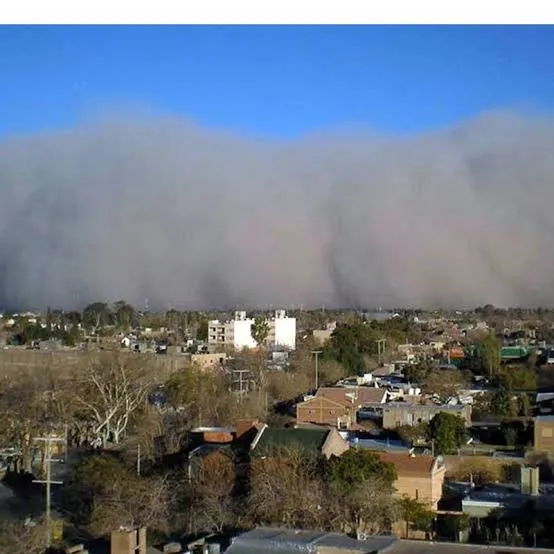
- The arrival. Temperatures climb as if someone opened an oven, and plastic bags fly like migrating birds headed for San Juan. The city looks like a post-apocalyptic movie, except that instead of zombies there are dry leaves.
- Plot twist. Sometimes they announce the apocalypse and the Zonda never shows up, like a guest who confirms and cancels at the last minute because he’s tired. Other times everyone swears it’s here, shuts everything… and the weatherman clarifies that it’s just a north wind. Apocalypse cancelled due to misdiagnosis.
- The day after. The south wind blows in, it gets cold and everyone goes out to sweep the sidewalk as if nothing happened. Mendoza doesn’t have weather: it has mood swings.
The memes (and their prophet)
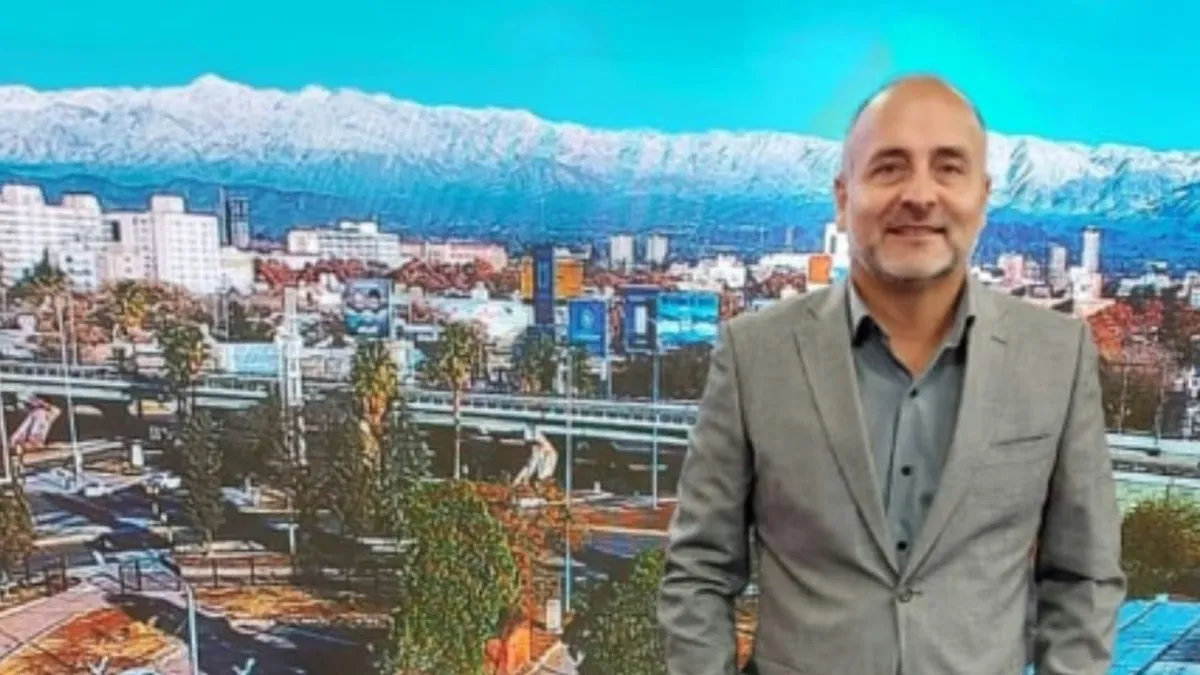
Every alert brings a flood of memes on social media. And there’s always a reference to Miguel Flores, the TV weatherman played by Guillermo Francella in the Argentine movie Granizo(released in English as “Hail”). But in Mendoza we don’t need fiction: we have Fernando Jara, the forecaster the media turn to every time the sky looks strange. He is the true sommelier of wind: just as a sommelier can tell a Malbec from a Cabernet with one sip, Jara can tell the Zonda from a north wind. And, like any good sommelier, he won’t be rushed.
What is a meme (and why is it almost a language in Argentina)?
A meme is an image with a funny line that people share on social media and WhatsApp. In Argentina we make them about everything: football, inflation, the weather. As soon as a Zonda is announced, the memes arrive before the wind does.
Here are three classics, in their original Spanish, with the translation and the joke explained underneath so you don’t miss out.
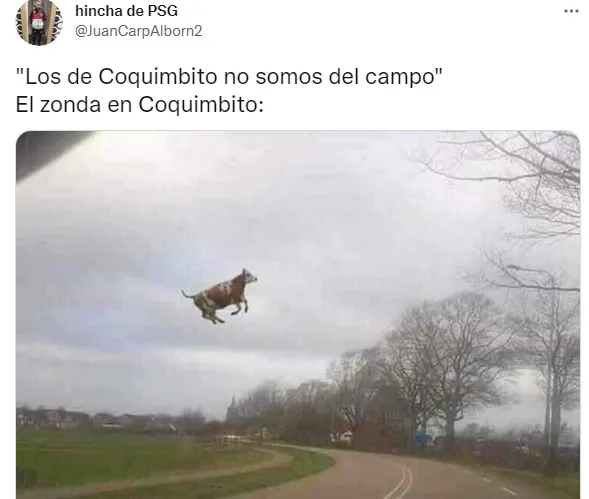
Translation and joke: “Those of us from Coquimbito aren’t country people.” The Zonda in Coquimbito: (a flying cow). Coquimbito is the district of Maipú where Maipu Bikes is, among vineyards and small farms. The author is teasing locals who swear it isn’t the countryside: the Zonda proves otherwise, flying cow included. (Earlier we said cows don’t fly here. In Coquimbito, apparently they do.)
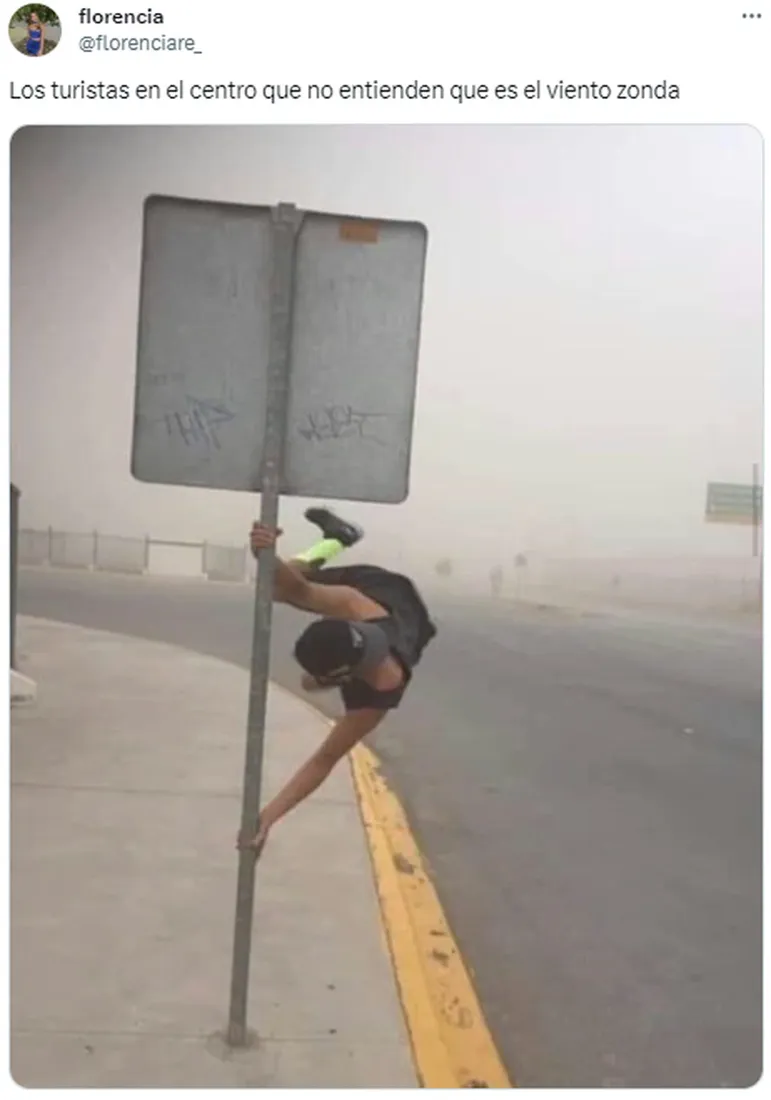
Translation and joke: “Tourists downtown who don’t understand what the Zonda wind is.” The photo shows someone hugging a street sign so they don’t blow away. If you’ve read this guide, that won’t be you.
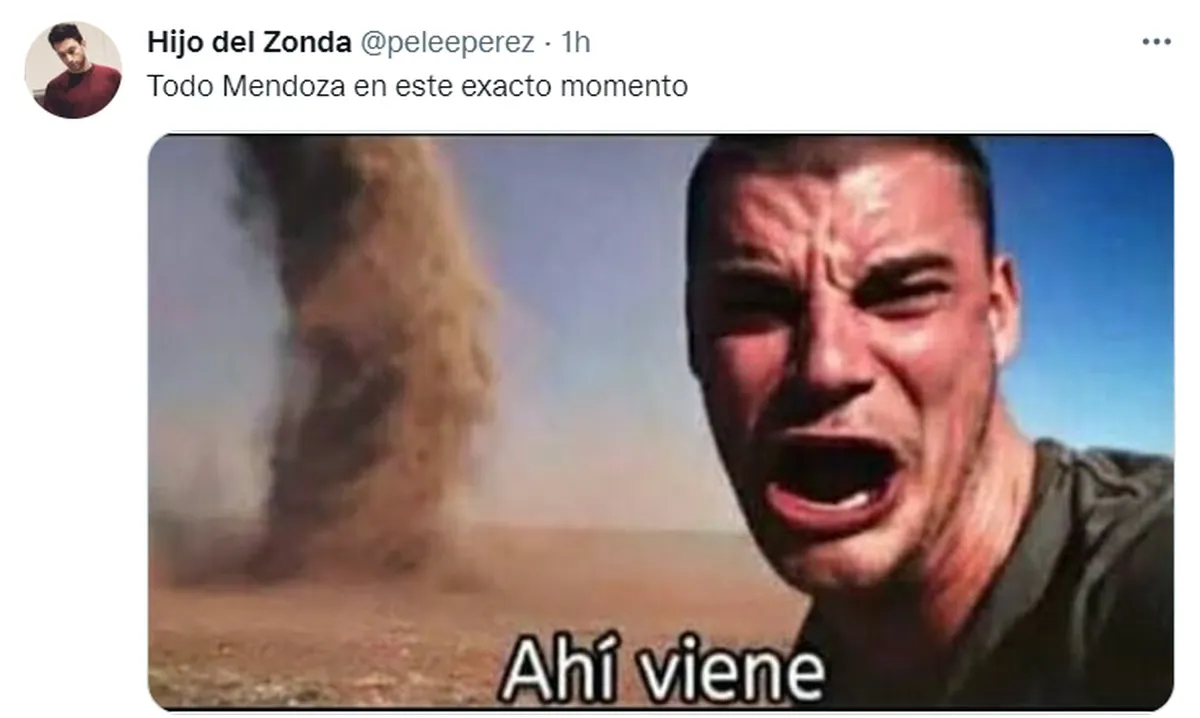
Translation and joke: “All of Mendoza at this exact moment.” A dust devil and someone screaming “Ahí viene” (“Here it comes”): that’s the face of the whole province when the alert is confirmed.
Does the Zonda belong to Mendoza or San Juan?
The name comes from the Quebrada de Zonda, a gorge in the neighboring province of San Juan, and people there claim it as their own. Mendocinos reply that the name may be from San Juan, but the wind blows here without asking permission. Meanwhile, the Zonda crosses the provincial border without showing its ID.
Your wind back home has a cousin in Mendoza
If your country has already taught you to live with a wind like this, you’ll survive the Zonda with a head start. (We’re leaving the science for our practical guide to the Zonda wind; here we’re just having a laugh.)
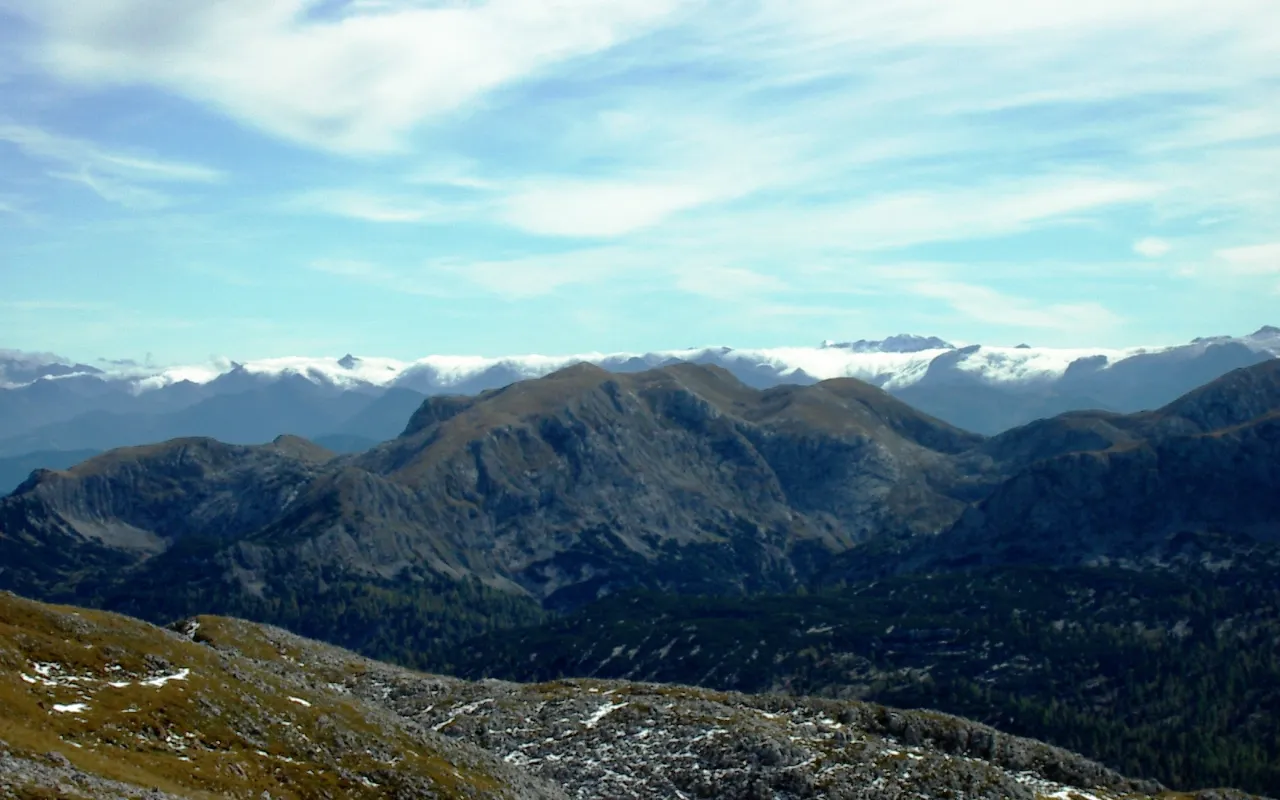
🇩🇪🇨🇭🇦🇹 The Föhn. The Zonda’s first cousin: same phenomenon, different passport. In German, Föhn also means “hair dryer”: welcome to Mendoza, the province with a built-in hair dryer. Germans also have the expression einen Föhn kriegen, which means “to blow your top”. We’re adopting it: from now on, when someone in Mendoza gets angry, they “caught a Zonda”.
More Zonda cousins around the world
🇨🇦 The Chinook. They call it the “snow eater” because it melts snow in a few hours. There isn’t much snow to eat here, so the Zonda settles for your hairstyle.
🇺🇸 The Santa Ana winds. Dry, hot and famous for putting everyone in California in a bad mood. Same spirit, different accent.
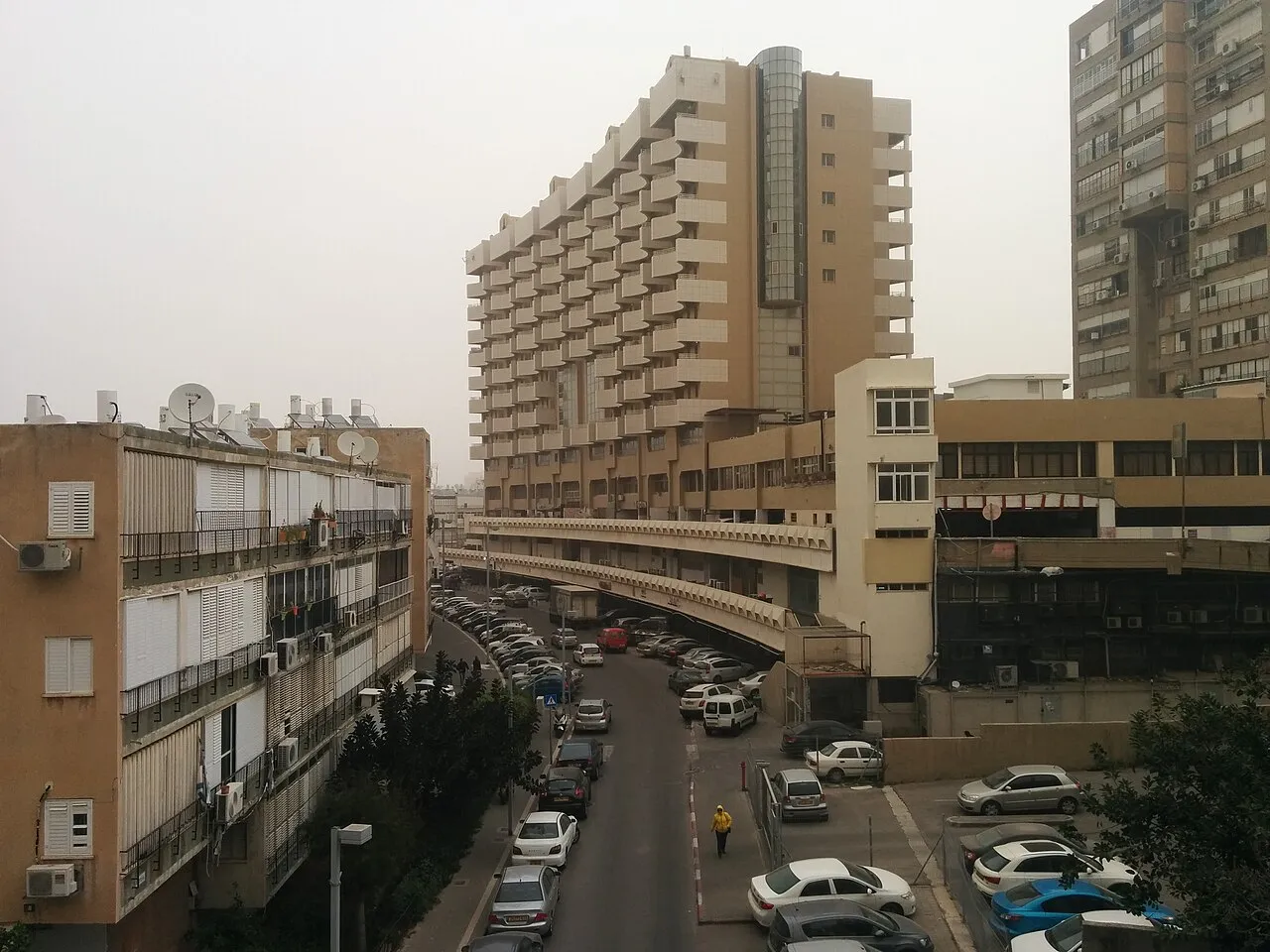
🇮🇱 The sharav or khamsin. It comes from the desert, not the mountains, but the feeling is identical. Khamsin means “fifty” in Arabic, after the number of days it tends to show up. The Zonda never learned to count.
🇫🇷 The Mistral. If you’re from the south of France, you’ve already learned to blame the wind for everything. You’ll feel right at home here.
🇬🇧🇮🇪🇳🇱 The opposite case. You know all about wind, but yours comes with rain included. Picture the worst storm on your coast, only dry, hot and with dirt between your teeth. Dutch friends: we know cycling into a headwind is your national sport, but this is another level.
Testimonials from people who managed to survive the Zonda (100% made up)
“In Tel Aviv we have the sharav. It’s the same here, but with a view of the Andes.”
— Noa, Israel
“I packed a hair dryer. In Mendoza they told me it came included.”
— Lukas, Germany
“I’ve been cycling into the wind since I was four. Maipu Bikes told me not that day. For the first time in my life, I listened.”
— Emma, the Netherlands
“I left Godoy Cruz at three. By five I was in San Juan. Nobody asked for my ID.”
— A supermarket bag, currently in transit
Grown-up face on: the serious side of how to survive the Zonda
To survive the Zonda, there is one rule that is no joke. No fires during the Zonda. Ever. No barbecue, no campfire, no cigarette butt out the car window. The air is so dry that a spark can turn into a wildfire in minutes: during one episode in 2022 there were more than a hundred fires in the province. And even if you already feel Argentine, the asado can wait.
| When | What to do |
|---|---|
| Before | Check the alerts from Argentina’s National Weather Service (SMN) |
| During | Stay indoors, close the windows, drink water and leave the bike for another day |
| After | Keep a jacket handy: when the south wind comes in, the temperature drops suddenly |
Why don’t you ride a bike to survive the Zonda?
Technically, a bike is a kite with pedals. Light, with very little touching the ground and a lot exposed to the wind.
- Headwind: you pedal with all your soul and get about as far as you would on a gym treadmill.
- Tailwind: you go faster than you want, and suddenly the brakes feel like a suggestion.
- Crosswind: the most dangerous. A gust pushes you toward the shoulder or into the road without asking permission.
Add dust in your eyes, branches that fall without warning and a dry heat that dehydrates you before you notice. None of that pairs well with a wine tasting.
That’s why, if there’s a Zonda alert on the day of your tour, Maipu Bikes will contact you to cancel the ride, explain the situation and reschedule it for another day whenever possible. We’re not being difficult: we’re looking after you. On a bike, the way to survive the Zonda is simple: you don’t go out that day.
Cristian and the Maipu Bikes team also make sure conditions are safe before every ride. If the Zonda appears during the route, we follow the appropriate protocol. And if the day starts calm but an alert is forecast for later, we always give you safe directions when we explain the map.
As Scarlett O’Hara would say: tomorrow is another day. And in Mendoza, after the Zonda, tomorrow is usually the best day to ride: clear skies, sharp mountains and zero dust.
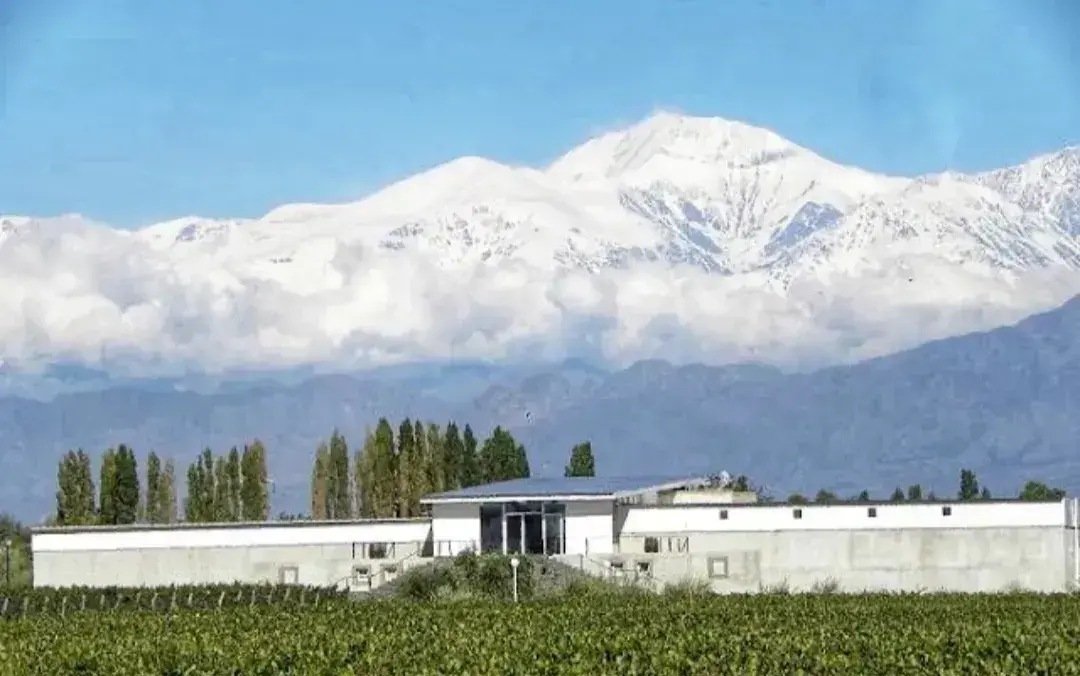
Plan B to survive the Zonda: Mendoza indoors
The Zonda is the only wind in the world that forces you to drink wine indoors. Make the most of it:
- Wineries with indoor tasting rooms, such as Los Toneles (Guaymallén) or Trapiche (Maipú). Take a taxi, not a bike.
- Mercado Central, in the city: empanadas and local food where the Zonda can’t get in.
- Museo del Área Fundacional: colonial history, partly underground. The one place the Zonda can’t find you.
- La Nave UNCUYO or the Museo Cornelio Moyano, to spend the afternoon.
- Shopping malls: Mendoza Plaza Shopping or Palmares Open Mall.
Check opening hours before you go: during an alert, some places change their schedules.
The handbook to survive the Zonda
- The bunker rule. During the strongest hours, stay indoors with doors and windows closed.
- The cactus rule. Drink water even if you’re not thirsty: the Zonda dries you out faster than a wine tasting.
- The treacherous shade rule. Don’t park under trees. That shade could end up on your hood.
- The sidewalk rule. If you’re walking, avoid heavily wooded squares and watch your step: with dust in your eyes, your foot will find the acequias (irrigation ditches) all by itself.
- The laundry rule. Don’t hang clothes outside. They’ll dry very fast… at your neighbor’s house.
- The jacket rule. When the Zonda leaves, the south wind comes in and it gets cold all of a sudden.
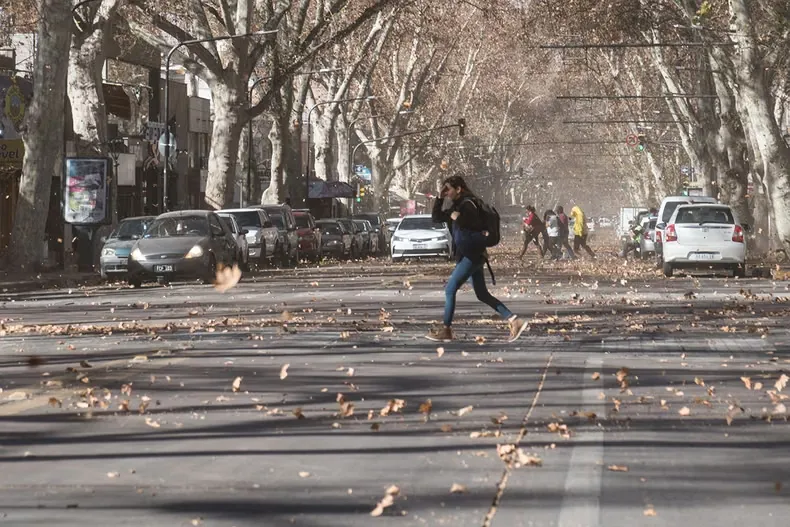
And the rule that is no joke: if there’s an alert, follow the instructions from Civil Defense. Don’t touch fallen power lines and, if you see one, call 911. If you’re driving, slow down. If you’re heading to Chile, check the status of the Cristo Redentor Passfirst.
Golden rule: the best pairing for a Zonda day is a roof.
Frequently asked questions (that nobody asked, but we’ll answer anyway)
How do I know if the Zonda is coming?
Check the alerts at smn.gob.ar. Or ask any local what Jara said. If they don’t know, ask Jarilla: he doesn’t exist, but he always has an opinion.
Can I still do the tour if it’s “not that strong”?
No. If there’s an alert, we’ll contact you to reschedule. The Zonda doesn’t negotiate, and neither do we when it comes to your safety.
Why does my head hurt?
It could be the Zonda or last night’s Malbec. Locals always blame the Zonda: it sounds more elegant.
If I survive the Zonda, do I get a certificate?
Officially, no. Unofficially, you’re now an honorary Mendocino. If you also fell into an acequia, you get the premium version.
In short: how to survive the Zonda
The Zonda is a giant hair dryer blowing down from the Andes. It’s the Föhn’s cousin, the Chinook’s relative and the sharav’s spiritual neighbor. It’s the sepia filter on your photos, the official excuse of all Mendoza and the prophecy that begins with “and what did Jara say?”.
If you want the serious version, with all the practical info, read what the Zonda wind is and what to do if it hits during your trip.
Surviving the Zonda is easy: a roof, water and patience. The Zonda leaves. The vineyards, the mountains and your booking don’t.
Welcome to Mendoza, where even the apocalypse comes with a siesta.
Once the Zonda has passed, we’ll be waiting for you
If there’s a Zonda alert on the day of your booking, we don’t ride: we’ll contact you to explain the situation and reschedule if possible. Once it passes, choose your experience.
Self-Guided Wine Bike Tour
Self-guided rental
Bike, helmet, map and mechanical assistance. You choose your stops within the Maipu Bikes circuit and, if any of them requires a booking, we’ll send you the link. Tastings and meals are paid separately. When you get back, the Free Malbec Wine Happy Hour is waiting for you.
Maipu Wine Bike Experience
Itinerary with coordinated bookings
You follow a scheduled itinerary and we coordinate the bookings: Trapiche, Entre Olivos, Viña El Cerno and a tasting-menu lunch at Mevi. Bike, helmet and assistance included. At the end, the Free Malbec Wine Happy Hour.
Deja una respuesta