


Mendoza’s acequias: a guide to surviving them (in style) after three terroir Malbecs
Mendoza’s acequias: a guide to surviving them (in style) after three terroir Malbecs
If you’re visiting, sooner or later you’ll come across Mendoza’s acequias. This is the guide nobody gave you at the airport or the bus terminal, and that doesn’t appear in the best guidebooks. This is the guide to survive the acequias without losing your dignity.
You came to Mendoza for the wine, the mountains and the sunsets. You did everything right: sunscreen, a winery booking, comfy sneakers and a Malbec lined up, the kind described with words like “silky tannins”. Everything under control.
Until you take a step and the ground stops existing.
Relax. It’s not your fault. In your city, the sidewalk ends at the street. In Mendoza, the sidewalk ends in an ancient hydraulic system. It’s a paradigm shift, and paradigm shifts are hard.
Welcome: you’ve just met the acequia. And it met you first.
What are Mendoza’s acequias? (the version you can follow between glasses)
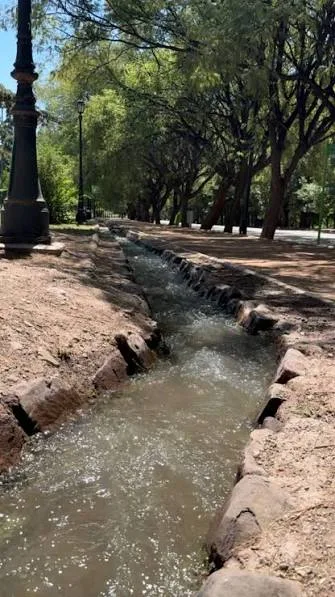
An acequia is an open-air irrigation channel that runs alongside streets, avenues and squares. It carries water down from the Andes, from the snowmelt, and shares it out across the whole city.
A tip for getting along: if you can, don’t call it a “ditch” (zanja). Nobody will tell you off, but you’ll see on the local’s face the same pain a sommelier feels when someone puts ice in a Malbec.
What’s it for? Something simple and brilliant: watering the trees. Mendoza is in a desert area. Without acequias there would be no green tunnels, no shade on the avenues and no cool plazas. There would be sun, stone and a lot of nostalgia.
In other words: Mendoza isn’t green by nature. It’s green out of sheer stubbornness. The Huarpe people were already managing the water long before the word “tourism” existed, and today the City of Mendoza alone has almost 450 kilometers of acequias, according to the municipality (MDZ).
To put it in perspective:
- That’s more than crossing from Mendoza to Santiago de Chile (about 360 km).
- It’s enough to go to San Juan and back (about 170 km each way) with over 100 km of acequia to spare.
- And that’s just the City: Godoy Cruz, Guaymallén, Las Heras and Maipú have their own.
In short: Mendoza’s acequias are a river taken apart into little pieces and neatly spread across the whole city.
Understanding what they are is the first step to survive the acequias.
The oldest tourist trap in the world (no harm intended)
Some local guides affectionately call Mendoza’s acequias “tourist traps”. Not because they’re designed to catch you, but because they come without an instruction manual. Nobody warns you at the airport: “Welcome, the sidewalk is a meter shorter than it looks.”
The acequia doesn’t apologize. It was there before you, before your grandparents and before wifi. It has centuries of patience: it waits for you, calm, cool and nicely shaded.
The five stages of the visitor trying to survive the acequias
- Curiosity: “How cute, a little canal.”
- Admiration: “What an ingenious system.”
- Confidence: “I’ve got the hang of it.”
- Plot twist.
- Wisdom: “Now I get why everyone here walks looking at the ground so elegantly.”
If you reach stage 5 without going through stage 4, congratulations: you have local reflexes and you’re in the minority. If you went through stage 4, congratulations too: you’ve got a story for every barbecue for the rest of your life.
The famous “terrible service” case
A few years ago, a tourist fell into an acequia on his first day and posted a flawless review on social media: “terrible service”. And, to be fair, he had a point. Nobody welcomed him. Nobody handed him a towel. And a diploma? Forget it.
Locals replied by the hundreds, some explaining the irrigation system with the patience of a kindergarten teacher and others defending the acequia like a relative. Because that’s how it is here: you can complain about the traffic, the heat or the parking, but the acequia is loved like an aunt. An aunt who gets you wet, but an aunt all the same.
Moral: to survive the acequias, a bad review won’t help; your phone’s flashlight will.
Testimonials from people who managed to survive the acequias (just kidding, they’re made up)
Like the big brands do, we wanted to add testimonials from satisfied customers. They’re all fictional. The acequia, on the other hand, is very real.
“I was between wineries, pedaling like a champion, and that thing swallowed me. I came out wet, but with an amazing story.”
— Nicolás, Buenos Aires ⭐⭐⭐⭐⭐
«つめたい、でもたのしい!» (Tsumetai, demo tanoshii!)
— Taio, Japan ⭐⭐⭐⭐⭐ We didn’t understand it because we don’t speak Japanese, but from his smile we knew everything was fine.
“I fell into the same acequia three times. We’re friends now. I gave her a name.”
— Martina, Córdoba ⭐⭐⭐⭐
“In my city, if you step into a canal, you marry a local. Here I fell in completely and nobody proposed. Still, five stars.”
— Hans, Freiburg ⭐⭐⭐⭐⭐
“Woof.”
— Firulais, Mendoza dog, frequent user ⭐⭐⭐⭐⭐
“I open the sluice gate at the right time. What happens after that is not my jurisdiction.”
— A tomero who preferred not to give his name ⭐⭐⭐⭐⭐
Mendoza’s acequias aren’t infrastructure: they’re family
For a local, the acequia isn’t “a canal”. It’s part of childhood.
Ask any local and they’ll tell you that as a kid they made paper boats and launched them in the acequia to see which reached the corner first. Epic races, with live commentary, and always one boat that sank at the first bend because of a plane-tree leaf.
Some remember using it as a makeshift pool in the middle of summer. That’s where we stop the story with a responsible-adult face: it’s not a pool, bathing or playing in the channels isn’t allowed and it can be dangerous. The water can rise suddenly and carry branches and objects, and it isn’t drinkable. Nostalgia is fine; for a dip, better a real pool.
What you will see on a hot day is some brave soul sitting on the edge, feet soaking, spa face and zero guilt. And next to them, almost certainly, a dog. Because Mendoza’s dogs figured it all out before we did: for them, the acequia is a water bowl, a fan, a pool and a social network all at once. If you see one lying in the water like a happy retiree, don’t worry: it’s doing exactly what it came to do.
And you respect family: surviving the acequias also means looking after them.
The tomero: the water DJ
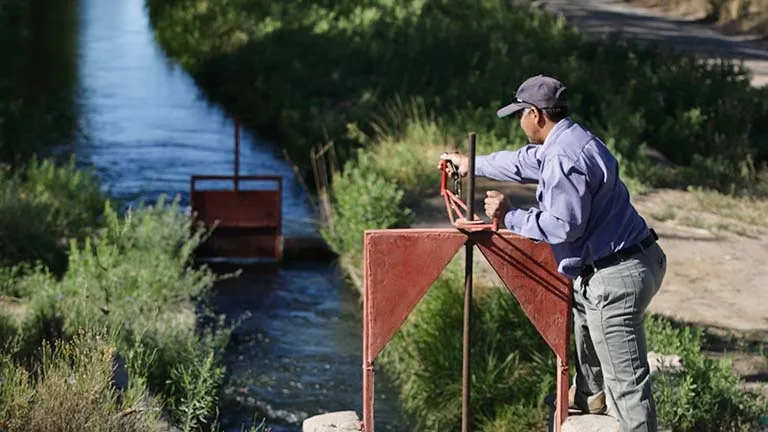
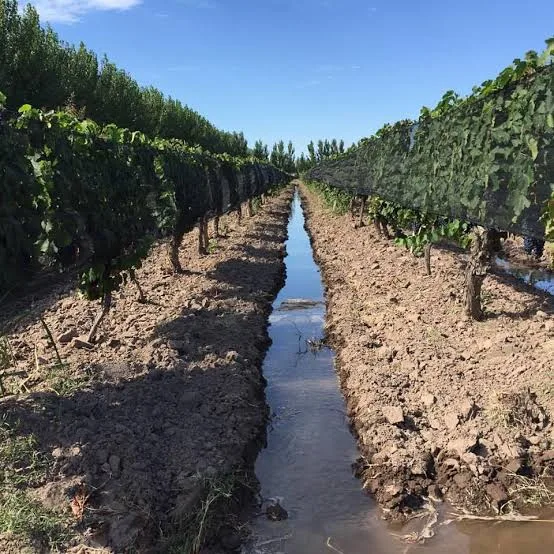
Behind every flowing acequia there’s someone who decides when it flows. On Mendoza’s farms and irrigation canals there’s the tomero, the person who opens and closes the sluice gates so the water reaches each farm, vineyard or field according to the irrigation shifts. Knowing when the shift changes also helps you survive the acequias: a channel that’s dry in the morning can be full in the afternoon.
He’s basically the water DJ: he decides when the track plays on each farm. And like any good DJ, he doesn’t take shouted requests.
Above the tomero are the channel inspectors, elected by the irrigators themselves and supervised by the General Department of Irrigation. In other words, in Mendoza water has elections, authorities, shifts and even timetables. Some provinces are less organized handing out concert tickets.
Is there anything like Mendoza’s acequias elsewhere? Yes, and it’s even stranger
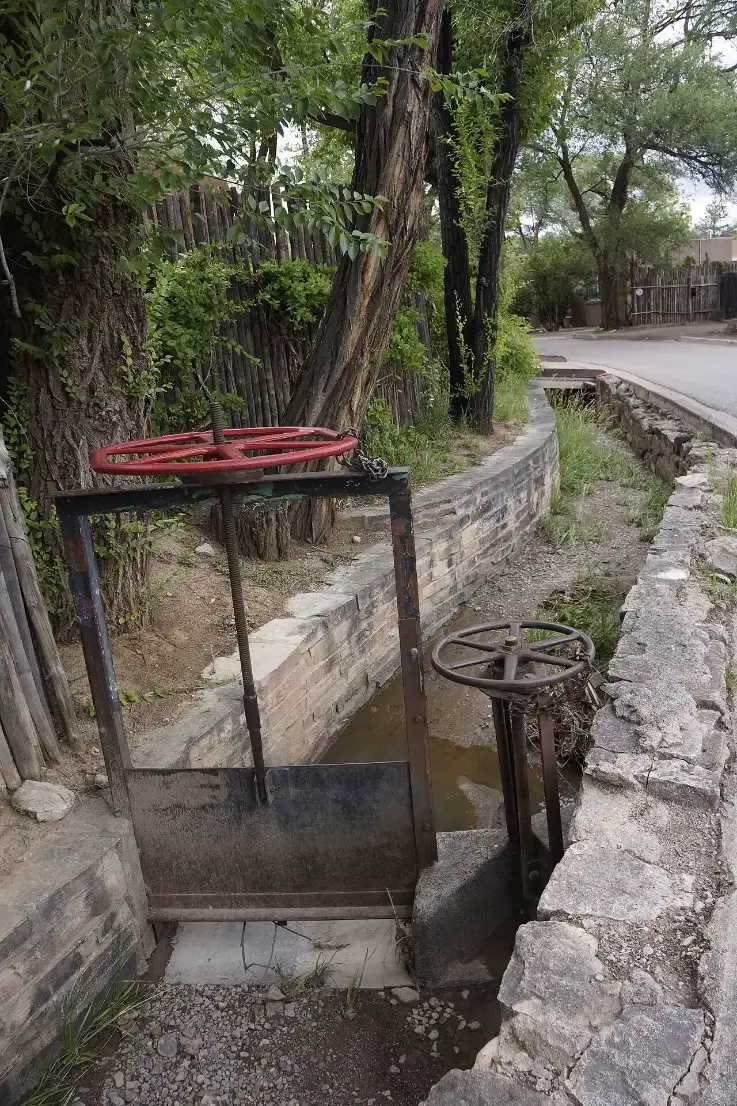
New Mexico, USA. They also say “acequia”, in Spanish, and have a mayordomo elected by neighbors to share out the water. Every spring they do la limpia: they go out with shovels to clean the canal and then share a meal. So the tomero’s distant cousin lives in the US desert and also takes water very seriously.
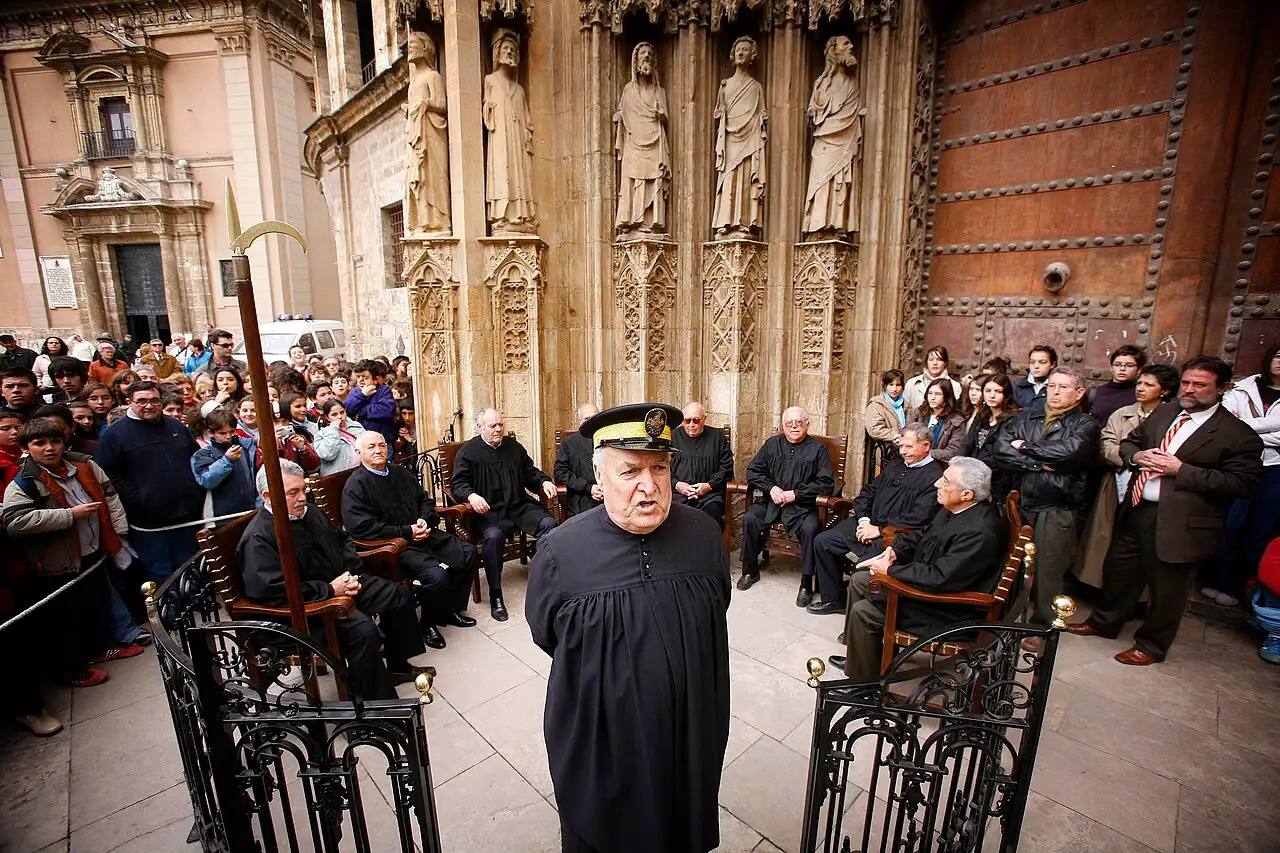
Valencia, Spain. There, acequias are so serious they have their own court. For more than a thousand years, every Thursday at noon, the Water Tribunal has met in front of the Cathedral to settle water disputes out loud. UNESCO declared it intangible cultural heritage of humanity. Imagine a court judging you for watering out of turn. That, but for real. The tomero reads this and nods in silence.
Freiburg, Venice and Amsterdam versus Mendoza’s acequias
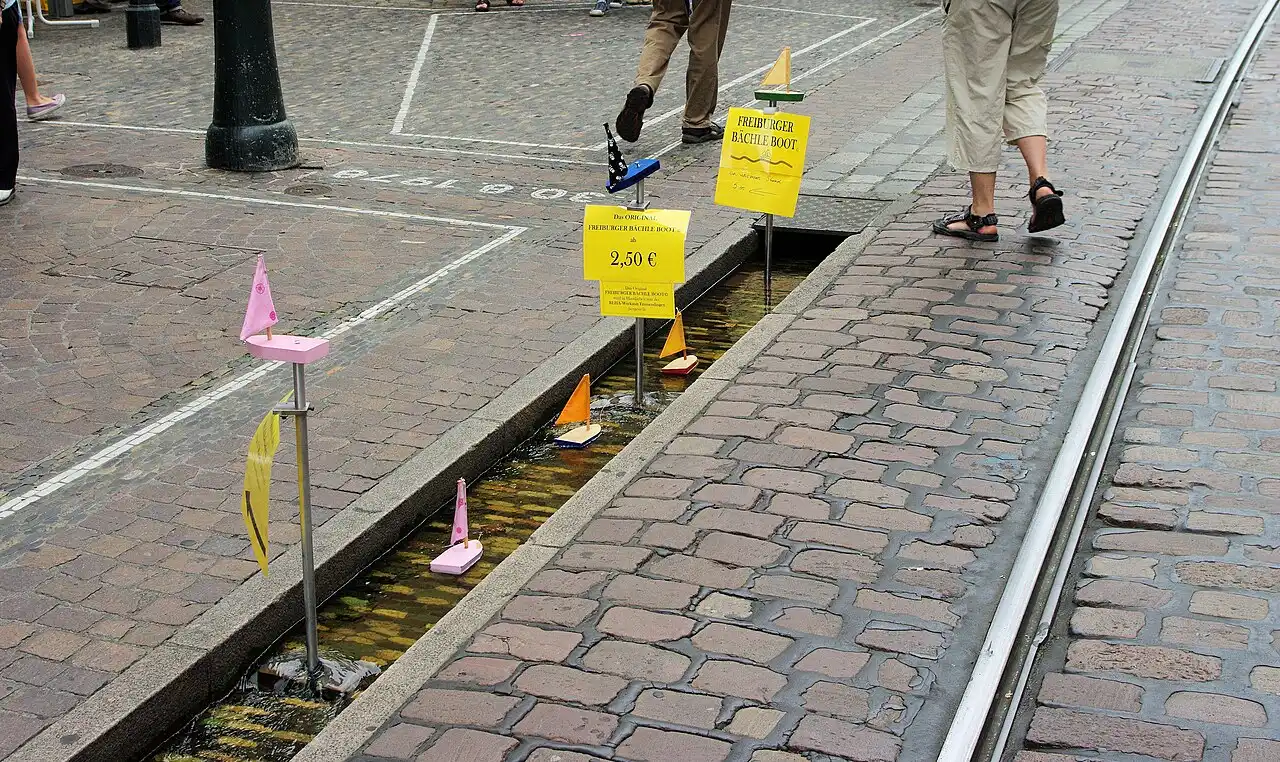
Freiburg, Germany. They have the Bächle, little channels running through the old town since the Middle Ages. And a legend: if you accidentally step in one, you’ll end up marrying someone from Freiburg. Note: it has to be accidental; on purpose doesn’t count.
Mendoza doesn’t have that legend (yet), but we propose the local version: if you fall into an acequia, you automatically become an honorary local. No wedding included, but you do get the right to say “here in Mendoza” for the rest of your trip.
Venice and Amsterdam. They have canals, sure. But there the canal is the destination. Here the acequia isn’t for sailing or gondola rides: it’s so the city can exist. It’s infrastructure with personality.
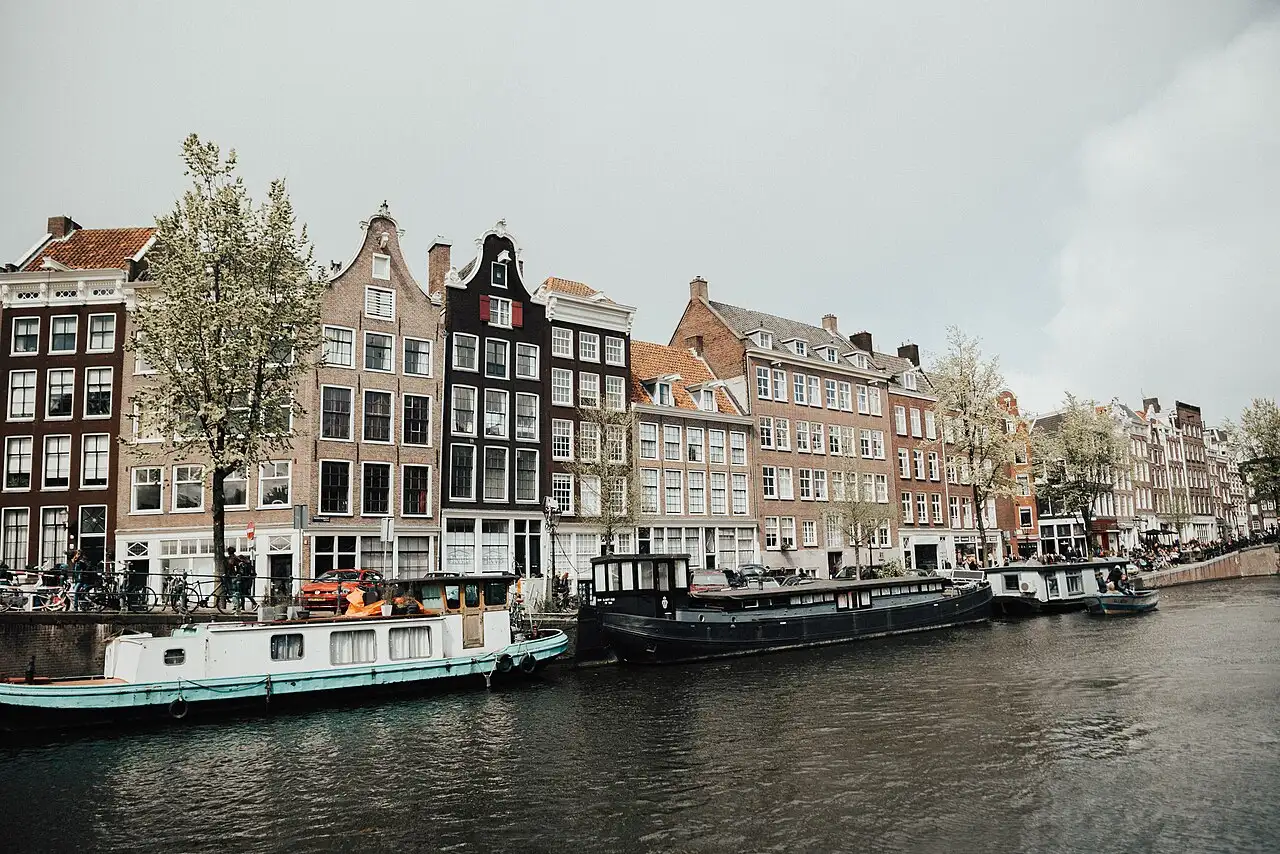
| Place | What they’re called | Who shares out the water | The difference |
|---|---|---|---|
| Mendoza | Acequias | The tomero | They water the trees of the whole city |
| New Mexico (USA) | Acequias | The mayordomo | They water fields and do “la limpia” every spring |
| Valencia (Spain) | Acequias | The Water Tribunal | Disputes are settled by a court over a thousand years old |
| Freiburg (Germany) | Bächle | The city | Little channels in the old town, with a marriage legend |
| Venice and Amsterdam | Canals | — | For sailing, not for irrigation |
They also have to survive the acequias over there, just without three Malbecs involved.
How to survive Mendoza’s acequias after three terroir Malbecs
Terroir Malbec has body, tannins and an amazing ability to make you feel you’re walking in a straight line. Hence this protocol:
- The little-bridge rule. If there’s a bridge, use it. If there isn’t, find another one. There’s no jury scoring your jump, and this isn’t the moment to discover you did track and field in high school.
- Look at the ground, not the moon. Yes, the moon over the Andes is beautiful. The acequia knows it too, and it’s waiting right there.
- Walk in the middle of the sidewalk. The edge is for people who drank mineral water.
- Don’t jump it “just like that”. That phrase has started many soggy stories.
- At night, double the attention. In the dark, the acequia is basically a hydraulic ninja.
- No climbing down for a selfie. No photo is worth a sneaker soaked in snowmelt.
- If you drop something, ask for help. The acequia is neither a path nor a lost-and-found.
- In a storm, keep well away. This is where the joke ends: in heavy rain the water can rise suddenly. Stay away from acequias and canals.
- No litter. The acequia waters trees; it doesn’t collect candy wrappers.
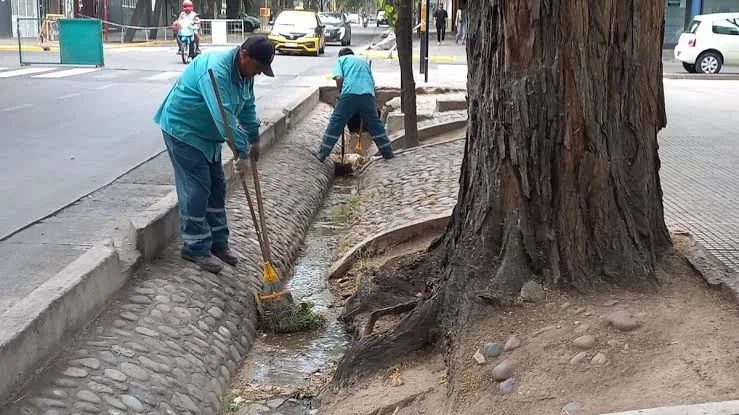
And a final sommelier’s tip: the best pairing for the third Malbec isn’t goat cheese. It’s a taxi.
And by bike? How to survive the acequias while pedaling
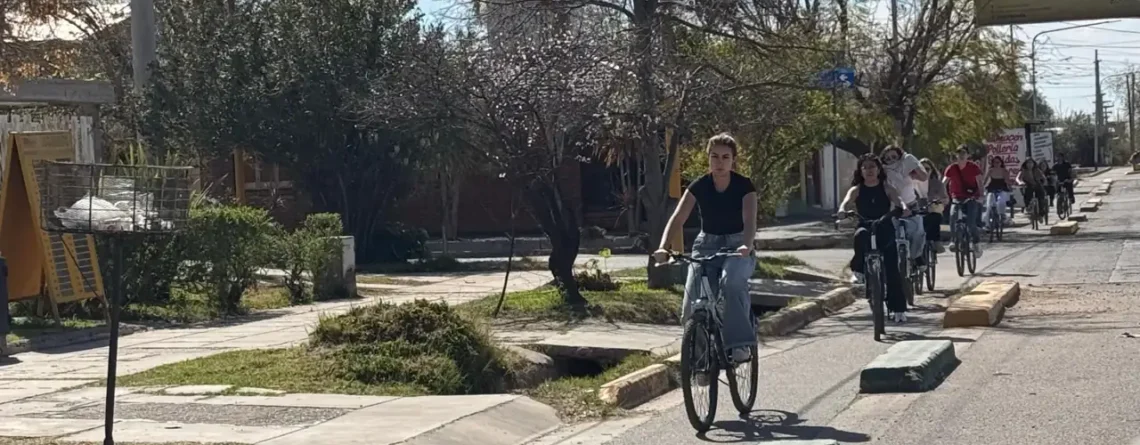
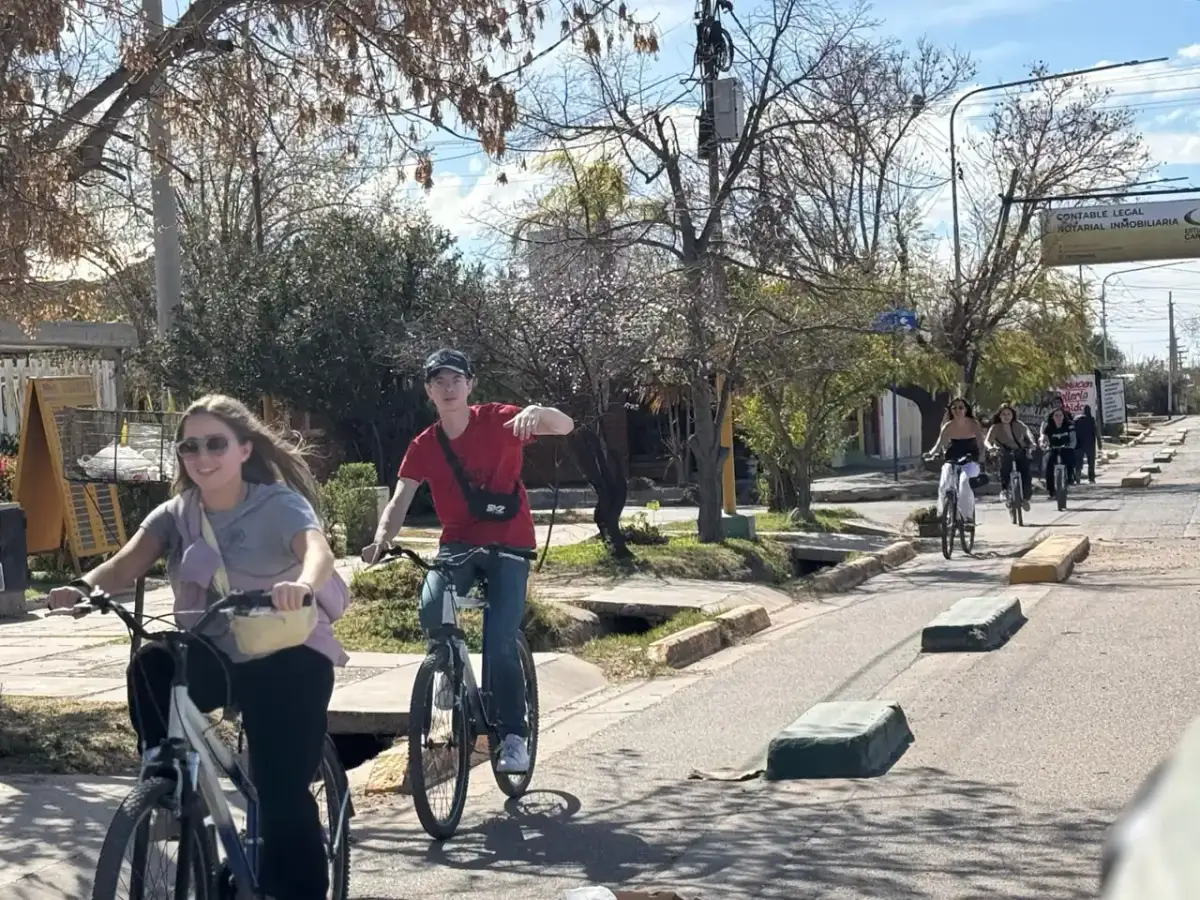
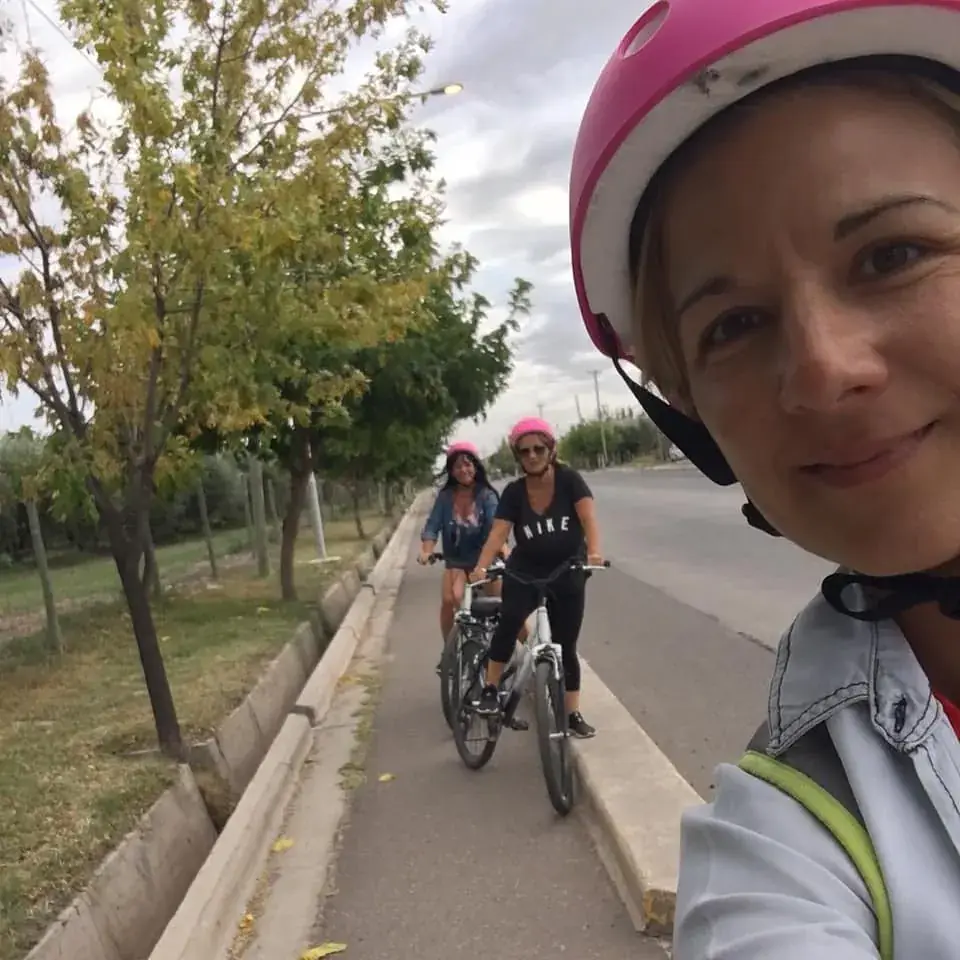
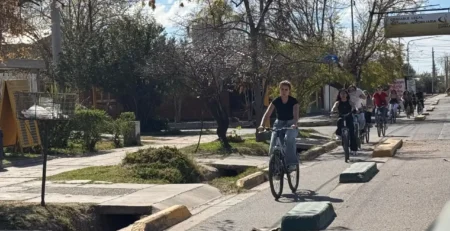
If you ride the wine routes by bike, Mendoza’s acequias will keep you company for much of the day. On many stretches with a bike lane, the setup is this:
- On the right: the road, with cars, trucks, buses and the odd tractor going at its own pace.
- In the middle: you, your bike and your best self.
- On the left: the acequia. Friendly, cool, historic… and feared.
It’s like a meditation class. You can’t get distracted to one side or the other. You have to be present, here and now, right in the center of your lane. Buddhist monks take years to reach that level of focus; a Mendoza cyclist only needs one afternoon among wineries.
Some tips:
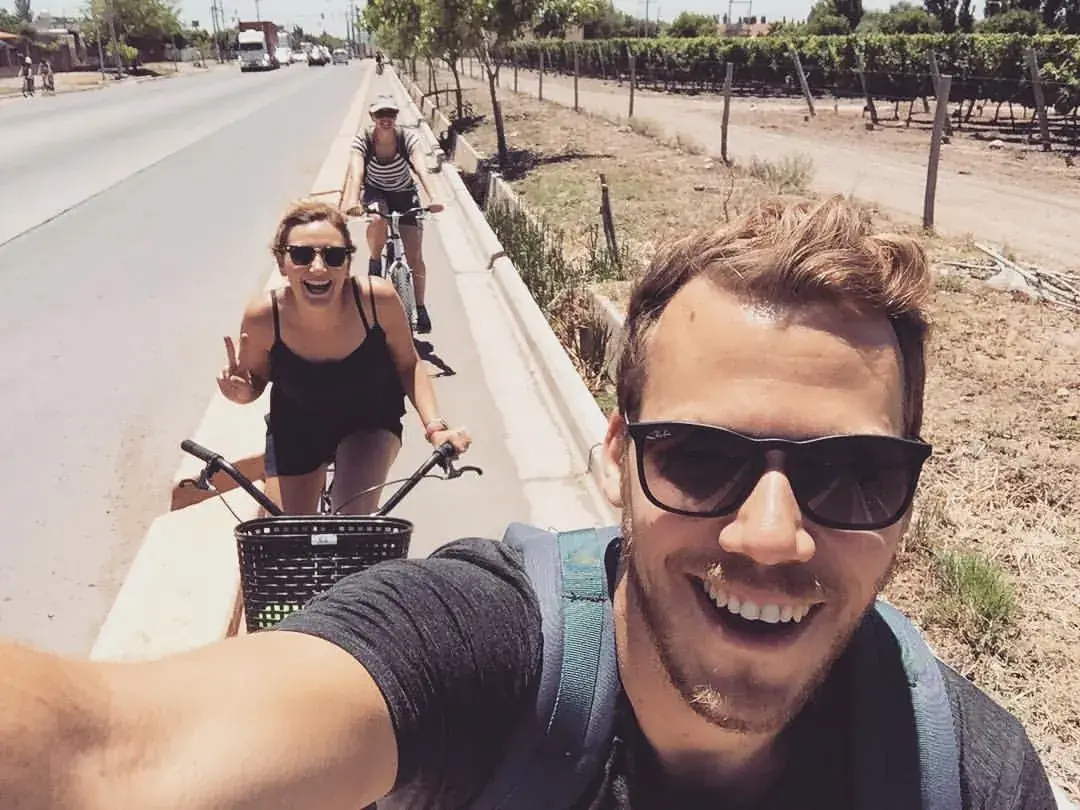
- Ride in the middle of the bike lane. The left edge has acequia views; the right, traffic views. The middle has a view of the future.
- Don’t look at the vineyard while pedaling. The bike tends to go where you look, and the vineyard tends to be on the acequia side.
- If you want a photo, stop completely and get off. Photos on the move can be artistic, but sometimes also aquatic.
- Save the last Malbec for the end. The acequia can’t tell a happy cyclist from a distracted one.
If it’s your first time on the route, it may help to know what to bring to tour the wineries by bike and whether it’s safe to cycle between wineries.
FAQ to survive the acequias (nobody asked, but we’re answering anyway)
Do acequias bite?
No. But they have excellent aim.
Can I drink acequia water?
No. It’s irrigation water, not drinkable. It’s for the trees. They have no other option; you do.
Can I bathe in the acequia if it’s really hot?
No. It’s forbidden and can be dangerous: the water can rise suddenly and sweep things along. That’s what pools are for, and they even have sun loungers.
Why do some acequias have water and others don’t?
Because the water runs in shifts. The acequia isn’t sad: it just isn’t its turn.
Who decides when the water comes?
The tomero. If you see him, greet him respectfully. He’s the most important DJ in the province.
If I fall into an acequia, do I get a certificate?
Officially, no. Unofficially, you’re already an honorary local.
Can I jump over the acequia to save time?
You can try. But the little bridges are there for a reason, and none of them will film you for social media.
What do I do if my phone falls in?
First, don’t dive in after it. Second, ask for help. Third, accept that it now has a more interesting story than yours.
Can dogs go in?
They do anyway. But if it’s your dog, make sure the water isn’t running strong and that it doesn’t stray from the edge.
How do I know I’m an acequia expert?
When you cross the street looking at the ground without noticing, and you do it even when you travel to another city.
Conclusion
Mendoza’s acequias are the province’s silent hosts. They’re the shade that saves you at four in the afternoon, the green tunnel on the avenues, the race track for paper boats, the official dog spa and the workplace of the province’s most important DJ. It isn’t hard to survive the acequias: just look at the ground, cross at the bridges and keep your phone in your pocket.
So when you see one, greet it respectfully. It’s heritage, history and identity.
Because in Mendoza there are two things worth always looking at: the scenery and the ground.
And if you fall in anyway, don’t worry: you’re now part of the tradition.
Coming to ride among acequias and vineyards?
Two self-guided experiences along the Maipú Wine Route. The acequias come free. Book online and pay at our shop.
Self-Guided Wine Bike Tour
Self-guided rental
Bike, helmet, map and mechanical assistance. You choose your stops within the Maipu Bikes circuit and, if any of them requires a booking, we send you the link. Tastings and meals are paid separately. When you get back, the Free Malbec Wine Happy Hour is waiting for you.
Maipu Wine Bike Experience
Itinerary with coordinated bookings
You follow a set itinerary and we coordinate the bookings: Trapiche, Entre Olivos, Viña El Cerno and a multi-course lunch at Mevi. Bike, helmet and assistance included. At the end, the Free Malbec Wine Happy Hour.




Deja una respuesta