



Argentine Spanish: a survival guide for Mendoza
Argentine Spanish: a survival guide for Mendoza
You arrive in Mendoza and someone asks you «¿Querés un café?» [ke-RES un ka-FE]. Your Spanish textbook said quieres, but the coffee is the same. With a «Sí, gracias» [si GRA-sias] you’ve just handled your first encounter with voseo. This Argentine Spanish guide helps you get through travel and exchange situations with phrases you can use from the very first day.
Here we’ve gathered what confuses newcomers the most: vos, the accent, the colectivo, the café, Argentine expressions you’ll see in chats and a few words to use with care. Next to each phrase you’ll see how it’s pronounced, with the stressed syllable in capitals. You don’t need to speak perfectly: Argentine Spanish is learned by listening and asking.
Voseo in Argentine Spanish
In Argentina people usually say vos [bos] when talking to someone in everyday conversation. You’ll hear querés [ke-RES], tenés [te-NES] and podés [po-DES], often without the pronoun. In directions you’ll hear forms like seguí [se-GI] and doblá [do-BLA]. If someone tells you «Seguí derecho y doblá a la izquierda» (go straight on and turn left) [se-GI de-RE-cho i do-BLA a la is-KIER-da], you’ve got two instructions in a single sentence. RAE and ASALE: voseo.
If túslips out, nobody will be offended: people will still understand you. But if you want to sound more natural in Argentine Spanish, just move the stress to the last syllable: tienes becomes tenés, puedes becomes podés. With older strangers or in an office you’ll also hear usted [us-TED]. And to speak to a group, Argentines don’t use vosotros: they say ustedes [us-TE-des], even among friends. «¿Ustedes quieren algo?» [us-TE-des KIE-ren AL-go] is the question you’ll hear at the table.
This table sums up the changes you’ll notice most:
| What your textbook says | What you’ll hear in Mendoza | How to pronounce it |
|---|---|---|
| «¿Quieres un café?» | «¿Querés un café?» | ke-RES un ka-FE |
| «Sigue recto y gira a la izquierda» | «Seguí derecho y doblá a la izquierda» | se-GI de-RE-cho i do-BLA |
| autobús | colectivo (or bondi) | ko-lek-TI-bo / BON-di |
| «coger el autobús» | «tomar el colectivo» | to-MAR el ko-lek-TI-bo |
| «mañana por la mañana» | «mañana a la mañana» | ma-NIA-na a la ma-NIA-na |
| «coge la mochila» | «agarrá la mochila» | a-ga-RRA la mo-CHI-la |
How Argentine Spanish sounds
In many parts of the country, ll and y sound similar to sh: «calle» and «yo» can sound like [KA-she] and [sho]. In other areas they sound closer to a soft y : [KA-ye], [io]. At first it’s hard to recognise words you already knew, but your ear adjusts within a few days.
Every region has its own accent, or tonada. In Mendoza you’ll hear the Cuyo accent, slower than the one in Buenos Aires. If you can’t follow something, it isn’t your Spanish: it’s the music of Argentine Spanish, and asking people to repeat solves it.
How to ask about the colectivo (city bus)
On the MendoTranwebsite, the city bus appears as colectivo [ko-lek-TI-bo]. If you’re going to pick up a bike in Coquimbito [ko-kim-BI-to], show the full address: just saying «Maipú» [mai-PU] may leave you without a clear stop. Maipu Bikes location.
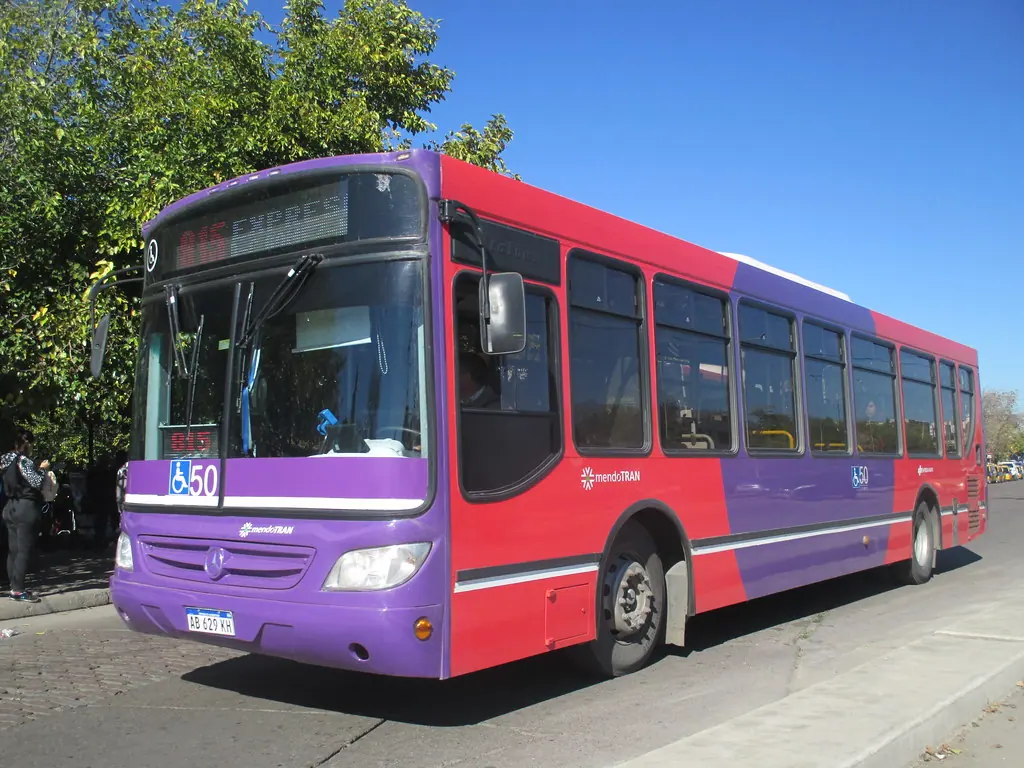
- «¿Dónde queda la parada del colectivo?» [DON-de KE-da la pa-RA-da del ko-lek-TI-bo] You’re asking where the bus stop is. In Spain you’d say «¿Dónde está la parada del autobús?»; in Mexico, «¿Dónde pasa el camión?».
- «¿Este colectivo pasa por Coquimbito?» [ES-te ko-lek-TI-bo PA-sa por ko-kim-BI-to] You want to know whether that bus goes to your destination. In Spain: «¿Este autobús pasa por Coquimbito?».
- «¿Me avisa dónde me tengo que bajar?» [me a-BI-sa DON-de me TEN-go ke ba-JAR] You ask the driver to let you know when you reach your stop. It uses usted because you’re talking to someone you don’t know.
In Argentine Spanish you’ll also hear bondi [BON-di] for the colectivo, especially among young people. You don’t need to use it, but it helps to recognise it.
What to say in a café or restaurant
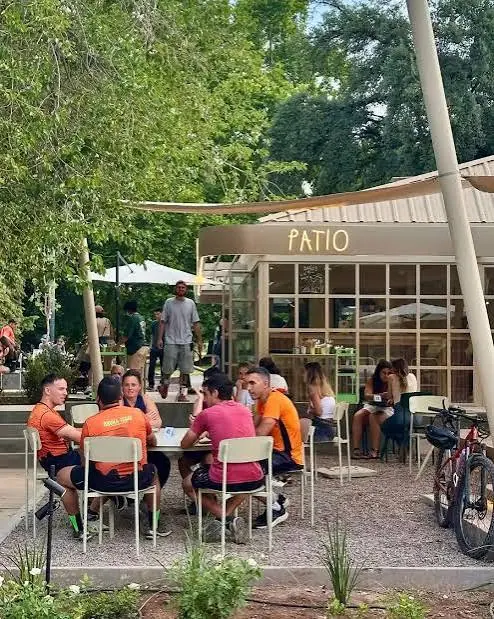
Cafés are another everyday place to practise Argentine Spanish. With these five phrases you can order and pay in any café or restaurant:
- «Para mí, una empanada, por favor» [PA-ra mi U-na em-pa-NA-da por fa-BOR] This is the usual way to order. In Spain you’ll also hear «¿Me pones una empanada?».
- «¿Algo más?» [AL-go mas] The waiter (mozo in Argentina, camarero in Spain, mesero in Mexico) is asking if you’d like anything else.
- «Eso es todo, gracias» [E-so es TO-do GRA-sias] You let them know you’ve finished ordering.
- «¿Me trae la cuenta?» [me TRA-e la KUEN-ta] You’re asking for the bill. In Spain people also say «¿Me cobra?».
- «¿Podemos pagar por separado?» [po-DE-mos pa-GAR por se-pa-RA-do] Everyone pays for their own. It’s best to ask before requesting the bill.
How to ask someone to repeat a phrase in Argentine Spanish
With a classmate, try «¿Podés repetir la última parte más despacio?» (can you repeat the last part more slowly?) [po-DES re-pe-TIR la UL-ti-ma PAR-te mas des-PA-sio]. At the university office, «¿Me podría anotar el número de aula?» (could you write down the classroom number?) [me po-DRI-a a-no-TAR el NU-me-ro de AU-la]. If you understood half of the directions, repeat that half: «Entonces, ¿nos vemos en la entrada a las nueve?» (so, we’ll meet at the entrance at nine?) [en-TON-ses nos BE-mos en la en-TRA-da a las NUE-be]. That way the other person can correct the place or the time without starting over.

Repeating what you understood is the best Argentine Spanish trick for travellers: people here tend to be patient with learners, and a «perdón, no te entendí» (sorry, I didn’t get you) [per-DON no te en-ten-DI] opens more doors than pretending you understood.
«Mañana a la mañana»: two mañanas in one plan
A friend texts you «Dale, nos vemos mañana a la mañana» [DA-le nos BE-mos ma-NIA-na a la ma-NIA-na]. If you learned that mañana means both tomorrow and morning, here they appear together. You can work out the phrase by looking at what surrounds each word.
In «Llego mañana», the word refers to the day. In «Trabajo a la mañana», it refers to part of the day. Together they mean tomorrow morning. You’ll also hear «mañana por la mañana». If you have a booking or a class, one detail is missing: «¿A qué hora exactamente?» (at what time exactly?) [a ke O-ra ek-sak-ta-MEN-te]. RAE: mañana.
Context also sorts out «banco» [BAN-ko] and «planta» [PLAN-ta]. In «Sentate en ese banco», you’re being offered a seat (a bench). In «Voy al banco a sacar plata», it’s about money (a bank). If the office is on the «planta baja», look for it at street level. These meanings are shared with other varieties of Spanish. RAE: banco · RAE: planta.
Argentine expressions for chatting
These are some Argentine Spanish expressions you’ll see in any WhatsApp group.
Dale [DA-le]. «¿Nos vemos a las seis? —Dale» confirms the plan. In «¡Dale, que perdemos el colectivo!», someone is hurrying you. Its use to accept proposals is documented in several Spanish-speaking regions. Study on the regional variation of dale.
Copado [ko-PA-do]. «El profe es copado» means the teacher is likeable. «¡Qué copado!» shows excitement about news or a plan. ASALE records this colloquial use in Argentina and Uruguay. ASALE: copado.
Quilombo [ki-LOM-bo]. «La cocina es un quilombo» may be a comment about the mess. It’s also used for a tricky situation. It’s informal and has a different, vulgar meaning. If you’re writing to the exchange office, «Hay un problema» (there’s a problem) works fine. ASALE: quilombo.
More Argentine expressions you’ll hear
Che [che]. Used to get the attention of someone you know well: «Che, ¿me pasás el mapa?» (hey, can you pass me the map?). ASALE: che.
Laburo [la-BU-ro]. Work, and also the place where you work: «Mañana tengo laburo» (I’ve got work tomorrow). ASALE: laburo.
Fiaca [FIA-ka]. Laziness, lack of energy: «Hoy tengo fiaca, salgo a pedalear más tarde» (I’m feeling lazy today, I’ll go cycling later). ASALE: fiaca.
La posta [la POS-ta]. The exact info, the reliable tip: «La posta es salir temprano a la Ruta del Vino» (the real tip is to head out early on the Wine Route). ASALE: posta.
Boludo [bo-LU-do]. Careful with this one. Among young friends it’s used affectionately, but it’s also an insult meaning stupid. Understand it, but don’t use it with strangers. ASALE: boludo.
The Argentine Spanish expressions in this guide at a glance:
| Expression | Pronunciation | Meaning | Example |
|---|---|---|---|
| Dale | DA-le | Yes, OK; also «hurry up» | «¿Vamos? —Dale.» |
| Copado | ko-PA-do | Cool, great | «¡Qué copado!» |
| Quilombo | ki-LOM-bo | Mess, chaos (informal) | «Es un quilombo.» |
| Che | che | To call someone you know well | «Che, ¿me pasás el mapa?» |
| Laburo | la-BU-ro | Work | «Mañana tengo laburo.» |
| Fiaca | FIA-ka | Laziness | «Tengo fiaca.» |
| La posta | la POS-ta | The exact info | «La posta es salir temprano.» |
| Boludo | bo-LU-do | Among friends, a friendly term; also an insult | Better not to use it |
A verb that changes meaning
If you learned «coger el autobús» in a course, in Argentina you’d better say «tomar el colectivo» [to-MAR el ko-lek-TI-bo]. Here coger has a vulgar sexual meaning. For a backpack, you can say «agarrá la mochila» [a-ga-RRA la mo-CHI-la]. RAE: coger.
It’s the best-known Argentine Spanish mistake among travellers. If it slips out, you’ll most likely get a laugh and a friendly correction.
Phrases for the Wine Route by bike
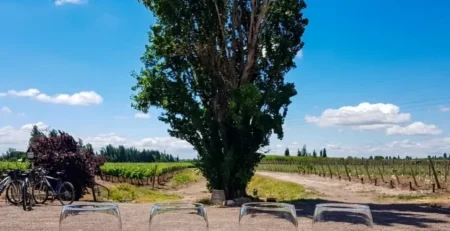
If you’re about to head to Maipú, practise the phrase with your destination’s address, for example that of Maipu Bikes in Coquimbito. Once on the route, these Argentine Spanish phrases will help you at wineries and stops:
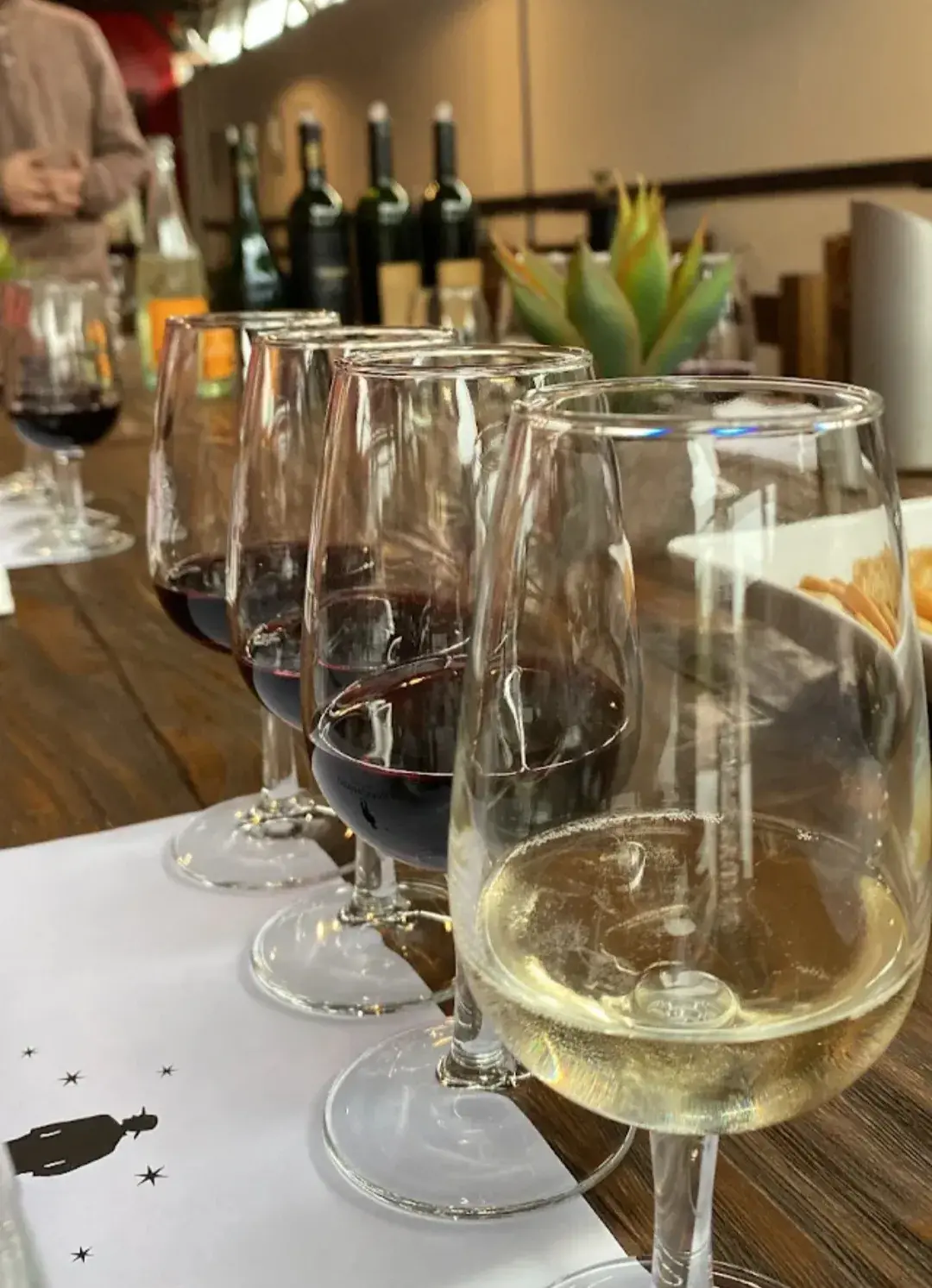
- «¿Hacen degustación?» [A-sen de-gus-ta-SION] Asks whether you can taste the wines. In Spain you can also say «¿Ofrecéis catas de vino?».
- «¿Hay que reservar?» [ai ke re-ser-BAR] Asks whether you need to book in advance. In Mexico you can also say «¿Hay que hacer reservación?».
- «¿Cuánto sale la degustación?» [KUAN-to SA-le la de-gus-ta-SION] Asks about the price. In Spain people usually say «¿Cuánto cuesta la cata?».
- «¿Dónde puedo dejar la bici?» [DON-de PUE-do de-JAR la BI-si] Asks where you can park or leave your bike.
- «¿Para qué lado queda la próxima bodega?» [PA-ra ke LA-do KE-da la PROK-si-ma bo-DE-ga] Asks which way the next winery is.
- «Se me salió la cadena, ¿me pueden ayudar?» [se me sa-LIO la ka-DE-na me PUE-den a-iu-DAR] Your chain has come off and you need help putting it back on.
You’ll share the road with cars on some stretches, so it also helps to understand a «¡Cuidado!» [kui-DA-do] or an «¡Ojo!» [O-jo]: both mean watch out.
Frequently asked questions about Argentine Spanish
These are the most common questions about Argentine Spanish.
Will people understand me if I use tú?
Yes. Argentines use vos informally, but everyone understands tú.
What does «dale» mean?
It’s used to accept a plan («¿Nos vemos a las seis? —Dale») and also to hurry someone up.
How is ll pronounced in Argentina?
In many areas it sounds similar to sh: «calle» [KA-she]. In others, it’s closer to a soft y.
What does «che» mean?
It’s a way to get the attention of someone you know well: «Che, ¿me pasás el mapa?».
Why shouldn’t you say «coger» in Argentina?
Because here it has a vulgar sexual meaning. For transport say «tomar el colectivo», and for an object, «agarrar».
Try out your Argentine Spanish on the Wine Route
Choose how to explore the Maipú wineries: on your own or with an itinerary we put together.
Self-Guided Wine Bike Tour
Self-guided rental
Bike, helmet, map and mechanical assistance. You choose your stops within the Maipu Bikes circuit and, if any need a booking, we’ll send you the link. Tastings and meals are paid separately. When you get back, the Free Malbec Wine Happy Hour is waiting for you.
Maipu Wine Bike Experience
Itinerary with coordinated bookings
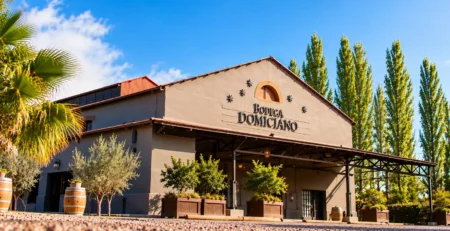
You follow a timed itinerary and we coordinate the bookings: Trapiche, Entre Olivos, Viña El Cerno and a multi-course lunch at Mevi. Bike, helmet and assistance included. At the end, the Free Malbec Wine Happy Hour.


Deja una respuesta