


Mendoza’s acequias: what they are, where they come from and how to stay safe around them
Mendoza’s acequias: what they are, where they come from and how to stay safe around them
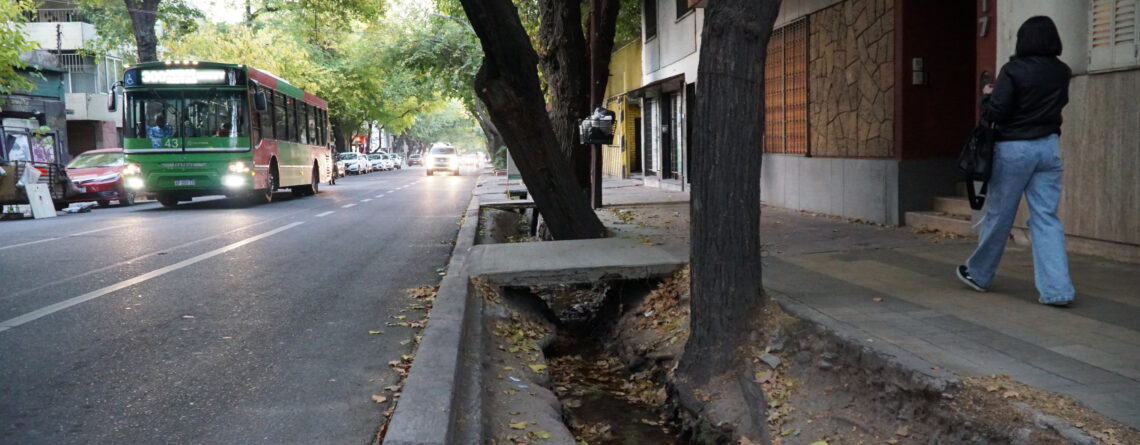
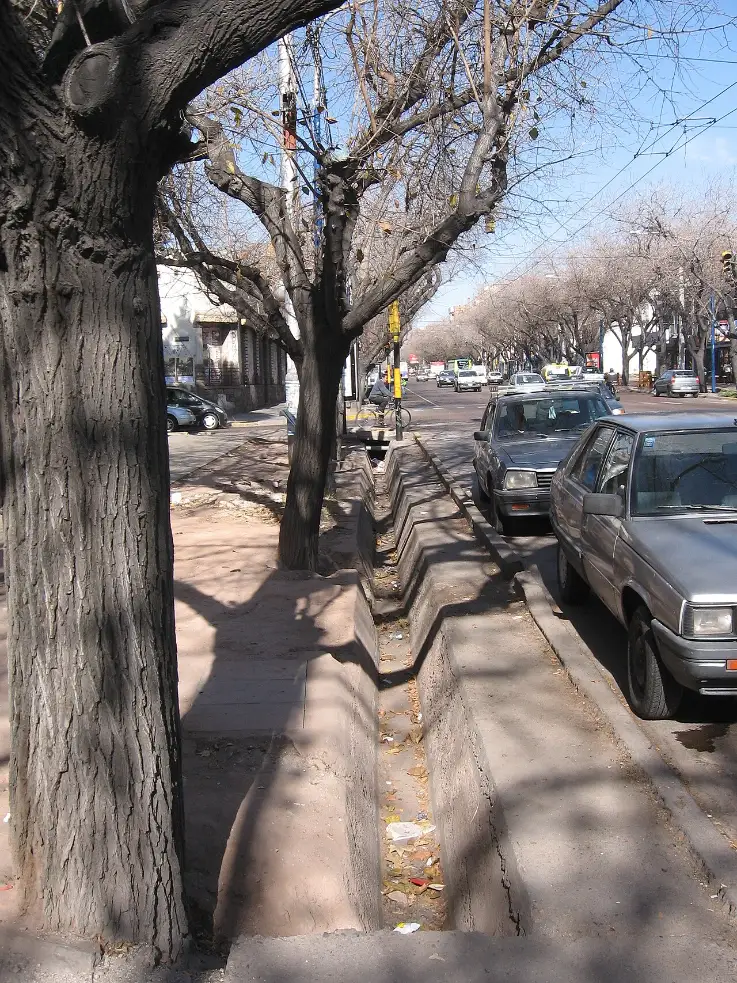
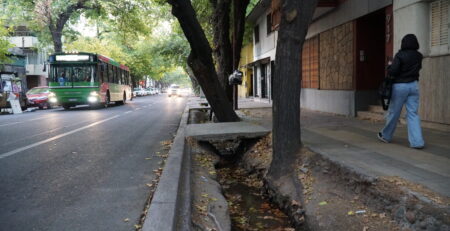
If it’s your first day in Mendoza, you’ve probably noticed already: along many streets runs an open channel, sometimes with water, sometimes dry, almost always under a row of trees. These are the acequias in Mendoza, and they explain a lot of what you’ll see on your trip: shady streets, green squares and vineyards in the middle of an area that, without irrigation, would be desert.
At Maipu Bikes we have been welcoming travelers since 2009, and the question comes up in every language: “What’s that running next to the street?” This guide is the long answer, with history, verifiable facts and a few practical tips for when you ride near them.
What Mendoza’s acequias are and how they work
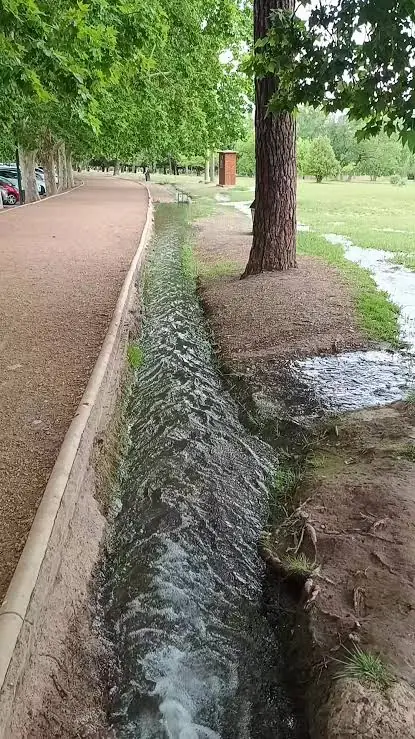
An acequia is a small irrigation channel, usually open. In Mendoza it is part of a network organized by size: the water comes from rivers flowing down from the Andes, runs through large canals, is split into hijuelas (branch channels) and finally reaches the acequias that line streets, farms and vineyards.
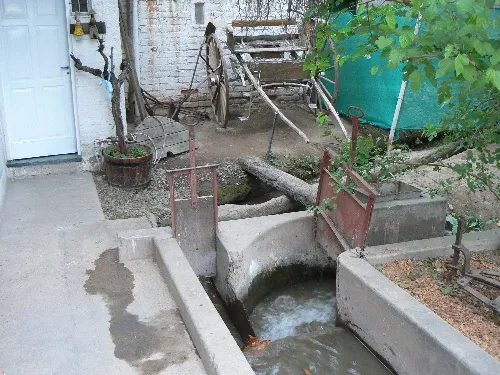
Almost everything works by gravity. The land slopes gently from the mountains towards the east, and the water uses that slope to move along without pumps on each stretch.
Why is all this needed? Because Mendoza is an arid region: it rains very little, and the city’s trees could not survive on rainfall alone. The green areas you’ll explore are oases created and kept alive by irrigation.
A story that begins before the city: the Huarpes
The acequias were not invented by the Spanish. When they arrived in 1561, the valley where Greater Mendoza stands today already had a network of channels built by the Huarpes, the region’s Indigenous people, who used it to water their crops and to have water. Research by architect Jorge Ricardo Ponte (INCIHUSA-CONICET) reconstructs that pre-Hispanic system and how the colonizers took it over and expanded it.
An honest note: in Mendoza you often hear that the Incas helped the Huarpes organize their irrigation. Ponte points out that the idea is widespread, but that there is no specific historical document that proves it. It may have happened; it simply hasn’t been proven.
During colonial times, the city grew by following the water: the acequias decided where people could live and farm. For centuries they were also used for drinking water. That changed at the end of the 19th century: after the cholera epidemic of 1886-1887, Mendoza began to separate drinking water from the network of canals and acequias. Since then, acequia water has been for irrigation only.
Mendoza’s acequias and their relatives around the world
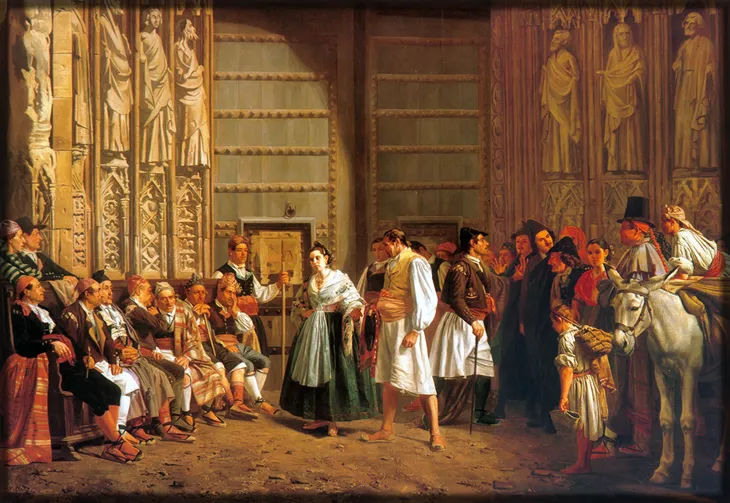
Mendoza is not the only place with acequias, and the word itself has a history. “Acequia” came into Spanish from Arabic: in the huerta of Valencia, in Spain, terms such as acequia (channel) and azud (sluice or small weir) are a legacy of the irrigation system the Arabs designed in the Middle Ages.
That same huerta has one of the most famous irrigation institutions in the world: the Water Tribunal of Valencia, which meets in public every Thursday to settle disputes over the sharing of water from its acequias. UNESCO declared it Intangible Cultural Heritage of Humanity in 2009.
What stands out in Mendoza is the combination: a network that began with Indigenous peoples, that the Spanish expanded with their own irrigation tradition, and that still runs through the streets of a large city. If you come from a country where canals are far from the sidewalks, it’s normal to be surprised.
Water, tree and acequia: why Mendoza has so much shade
Mendoza’s tree-lined streets are no accident. Since the acequia network already ran alongside the streets, in the late 19th and early 20th centuries it was possible to plant trees along them and water them with that water. The urban forestation plan, which ended in 1923, left much of the public trees you see today.
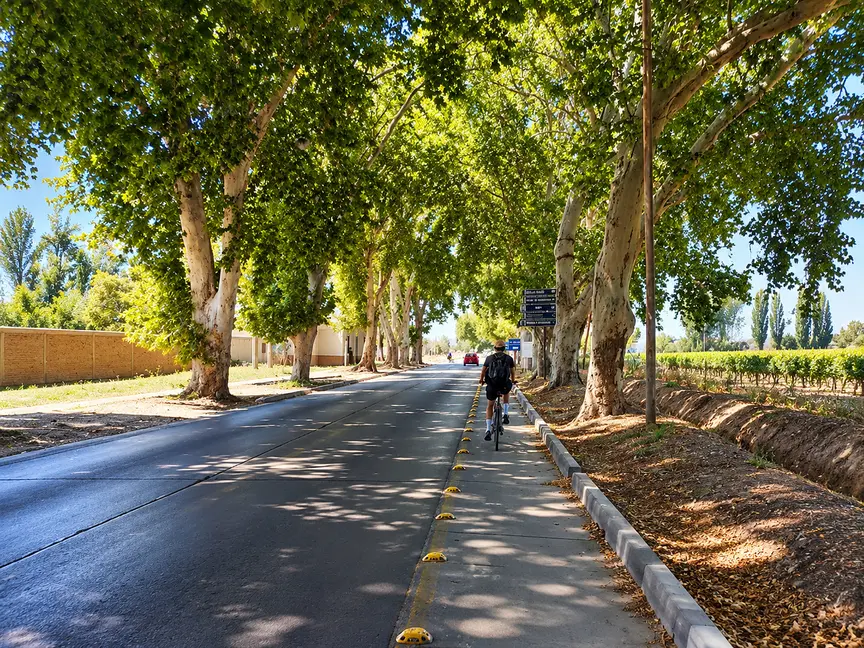
That’s why people in Mendoza talk about the trio water–tree–acequia: if one is missing, the other two suffer. Today the system faces real challenges: years of water crisis, concrete-lined acequias that let less water into the soil, and litter people throw into the channels. Several university studies have found pollutants in the water used to irrigate urban trees, and the issue is often debated in the province.
Who manages the water: Irrigación, inspectors and tomeros
In Mendoza, irrigation water has its own organization. The Departamento General de Irrigación (DGI, known simply as “Irrigación”) is the provincial body that manages the water and allocates each user’s share. It goes back to the Water Law of 1884, and the 1916 provincial Constitution gave it full autonomy.
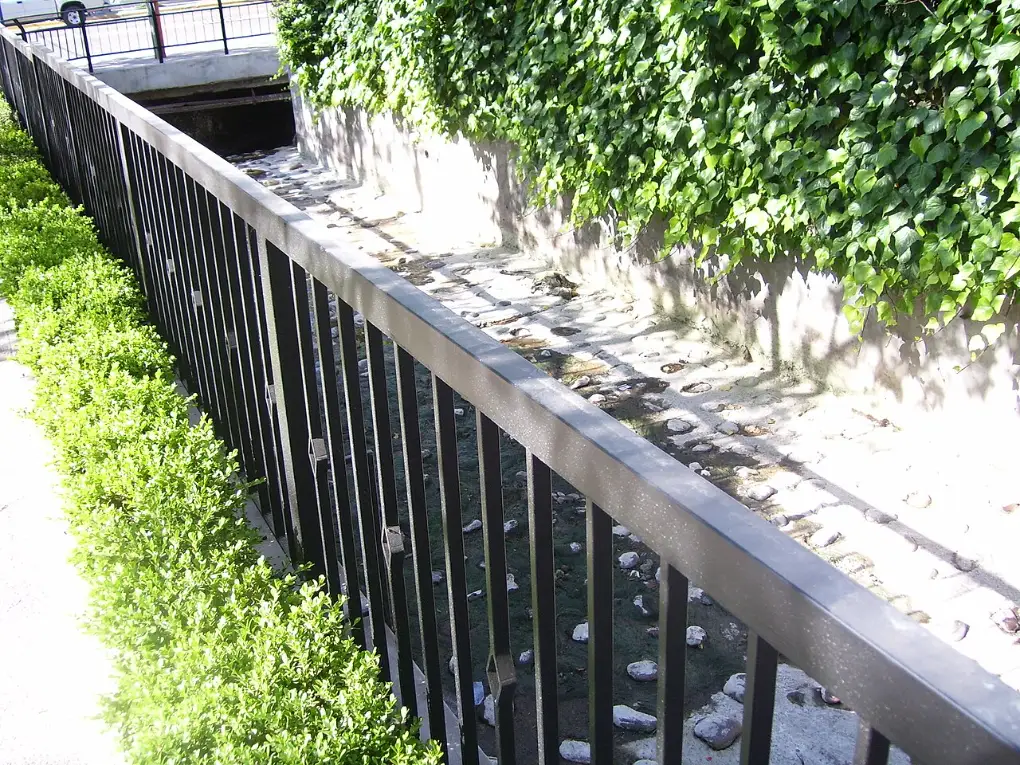
The users themselves are organized into Inspecciones de Cauce(channel inspectorates), which look after each canal and share out the water in irrigation turns. The tomero is the person who opens and closes the gates according to those turns. That’s why you sometimes see an acequia full and, a few hours later, dry: nothing broke, the turn simply changed.
Traveling in winter? Between May and August, Irrigación carries out the annual water cut to clean and repair the channels, because crops need less water at that time of year. Many acequias look dry or have very little water. Tap water in homes is not cut off because of this.
| Who | What they do |
|---|---|
| Departamento General de Irrigación | Provincial body that manages the water and allocates the shares |
| Inspecciones de Cauce | Organized users who look after each canal and set the irrigation turns |
| Tomero | Opens and closes the gates according to the turn |
| Annual cut (May to August) | Irrigación cuts the water to clean and repair the channels |
Mendoza’s acequias in Maipú and on the Wine Route
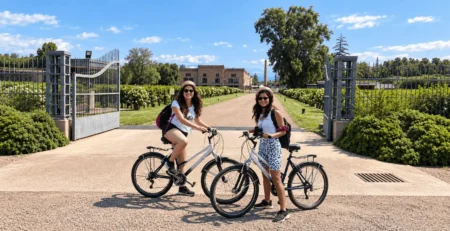
Maipú is an area with a farming and winemaking tradition that today combines neighborhoods, shops, avenues, wineries and vineyards. In this mixed landscape, the acequias are still in plain sight: they run alongside streets, bike lanes and sidewalks, flow into the farms and water vineyards and olive groves.
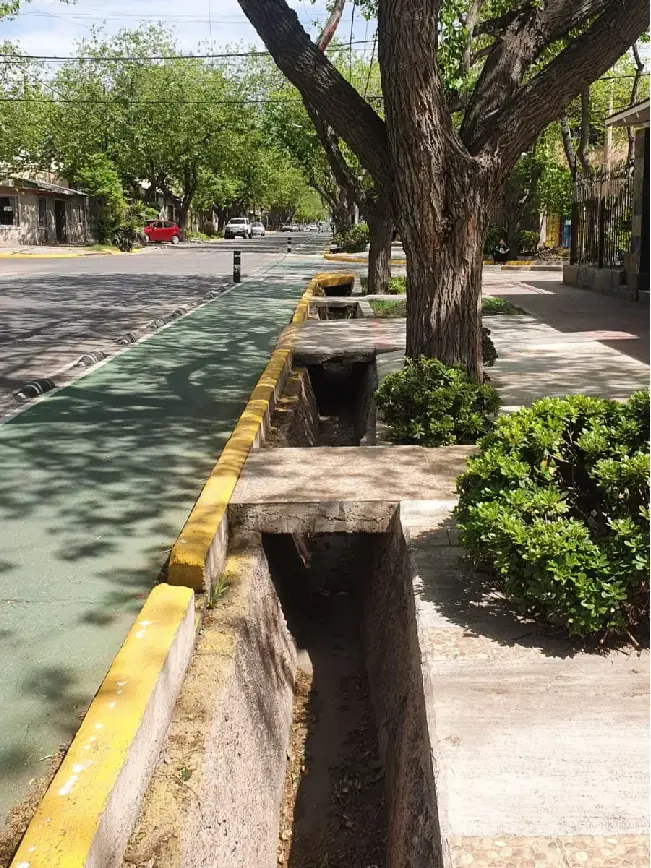
When you ride the circuit, you’ll see different kinds of acequias: some made of earth, others lined with concrete; some narrow and shallow, others deeper, with little bridges leading into the houses. Many have no railing or protection, because they are part of everyday scenery. It’s good to know this before you start pedaling.
If you want to know what the route is like in general, our guide on cycling safety between wineries explains how bike lanes, traffic and vineyards coexist.
Can you drink the water from Mendoza’s acequias? No
Even if it sometimes flows down clear and cool from the mountains, acequia water is not drinkable. It is irrigation water: it doesn’t go through treatment plants, and along the way it picks up everything from soil and leaves to litter people throw in. Studies by Universidad Juan Agustín Maza on the water used to irrigate the city’s trees detected hydrocarbons and fecal coliforms.
- Don’t drink it or fill your bottle from an acequia.
- Don’t wash your face or hands there, especially if you have a cut.
- Don’t go in for a swim or to cool your feet, even when it’s very hot.
- To refill, use tap or bottled water at wineries, restaurants and shops.
How to stay safe around Mendoza’s acequias
Falling into an acequia is so common in Mendoza that it’s almost a local joke. When a tourist complained on social media about falling into one right after arriving, locals replied with humor that “nobody who has passed through Mendoza has escaped a fall”. It almost always ends in a scare or a scrape, but on a bike, at night or in a storm it can be more serious.
If you’re on a bike
- Keep your distance from the edge of the bike lane or the road when there’s an acequia alongside.
- Enjoy the vineyards, but keep your eyes on the road while you ride. To take photos, stop and get off somewhere safe.
- Cross narrow little bridges slowly, or walk your bike across.
- Don’t stop right at the edge of an acequia: when you get off, it’s easy to step into thin air.
On foot
- When getting out of a car or taxi, watch where you put your foot: the acequia is often right next to the door.
- At night, some streets are poorly lit: walk on the sidewalk, not along the edge.
- If you’re traveling with kids, keep them close: an acequia with water is a real temptation for them.
In a storm, stay away. Besides irrigation, the channels also collect rainwater, and in a summer storm they can fill up in minutes and flow very strongly. The local press reports serious falls in those conditions, such as a cyclist rescued from a canal in March 2026. Don’t cross acequias or canals when the water is high, either on foot or by bike. In an emergency, call 911.
Paper boats and other acequia memories
For many people in Mendoza, the acequia is part of childhood. When the turn came and the water began to flow, kids made paper boats, dropped them into the acequia and ran along the sidewalk to see which one would get farthest before disappearing under a little bridge. Some still do it with their children.
Acequias also appear in songs, poems and stories from the Cuyo region, and in the materials the province’s schools use to teach how to care for water. For a mendocino they are not just a drain: they are a Huarpe legacy that still works every day.
So if you see someone sweeping leaves out of an acequia or complaining about the litter others throw in, now you know why.
Frequently asked questions about Mendoza’s acequias
What are the acequias in Mendoza?
They are small irrigation channels running alongside streets, farms and vineyards. They are part of a network that carries water from mountain rivers to the whole farming area and to the city’s trees.
Who built the acequias?
The system began with the Huarpes, before the Spanish arrived in 1561. It was later expanded during colonial times and modernized in the 19th and 20th centuries.
Is acequia water safe to drink?
No. It is untreated irrigation water and may be contaminated even if it looks clean. Don’t drink it or use it to wash.
Why are some acequias dry?
Water flows in irrigation turns, so an acequia can be full at one time and dry at another. Also, between May and August there is the annual cut to clean and repair the channels.
Are there acequias on the Maipú Wine Route?
Yes. They run alongside streets, bike lanes and vineyards all along the circuit. That’s why it’s best to ride attentively, away from the edge, and to stop when taking photos.
Sources consulted
- Ponte, J. R. “Historia del regadío. Las acequias de Mendoza, Argentina”. Scripta Nova, University of Barcelona.
- Dirección General de Escuelas and Departamento General de Irrigación. “El agua en Mendoza”, environmental education booklet.
- Government of Mendoza. “La corta anual de agua en toda la provincia está en marcha”.
- Government of Mendoza. “Ambiente concientiza sobre los beneficios y cuidados del arbolado público urbano”.
- Museum of History of Valencia. “El Tribunal de las Aguas”.
- Universidad Juan Agustín Maza. “Determinación de contaminantes antrópicos y fitotoxicidad en el agua de riego del arbolado público lineal de la ciudad de Mendoza”.
Ride among vineyards, olive groves and acequias
Both ways to explore the Maipú Wine Route with us are self-guided: you choose the pace, we give you the map and recommendations.
Self-Guided Wine Bike Tour
Self-guided rental
Bike, helmet, map and mechanical assistance. You choose your stops within the Maipu Bikes circuit and, if any of them requires a booking, we’ll send you the link. Tastings and meals are paid separately. When you get back, the Free Malbec Wine Happy Hour is waiting for you.
Maipu Wine Bike Experience
Itinerary with coordinated bookings
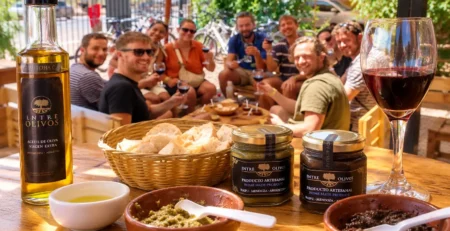
You follow a scheduled itinerary and we coordinate the bookings: Trapiche, Entre Olivos, Viña El Cerno and a tasting-menu lunch at Mevi. Bike, helmet and assistance included. At the end, the Free Malbec Wine Happy Hour.







Deja una respuesta