


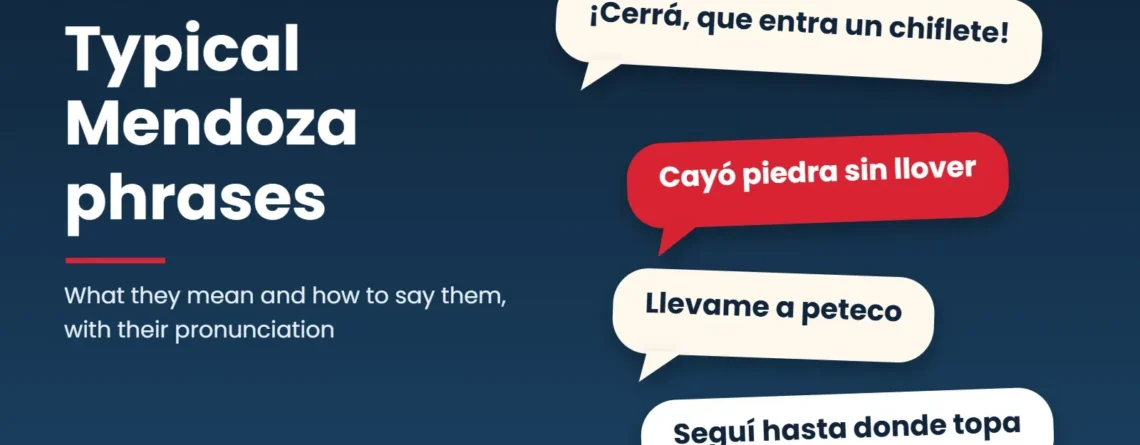
Typical Mendoza phrases: what they mean and how to say them
Typical Mendoza phrases: what they mean and how to say them
These typical Mendoza phrases are the natural follow-up to Mendoza’s local words: besides «choco» or «pandito», here you’ll hear whole phrases that don’t appear in any Spanish course.
This guide brings together 15 phrases you’ll hear at home, in the street and among friends. Each one comes with its pronunciation in brackets (the syllable in capitals is stressed), what it means and how it would be said in Spain or Mexico.
You don’t need to use them: recognizing them is enough to follow the conversation.
The 15 phrases at a glance
Before going into detail, these tables sum up the typical Mendoza phrases.
At home, in the street and with the weather
| Phrase | What it means | How it’s said elsewhere in Spanish |
|---|---|---|
| «Cerrá la puerta, que está entrando un chiflete» | Close the door, a cold draft is coming in. | In Spain: «está entrando corriente». |
| «Llevame a peteco» | Carry me on your back. | In Spain and Mexico: «a caballito». |
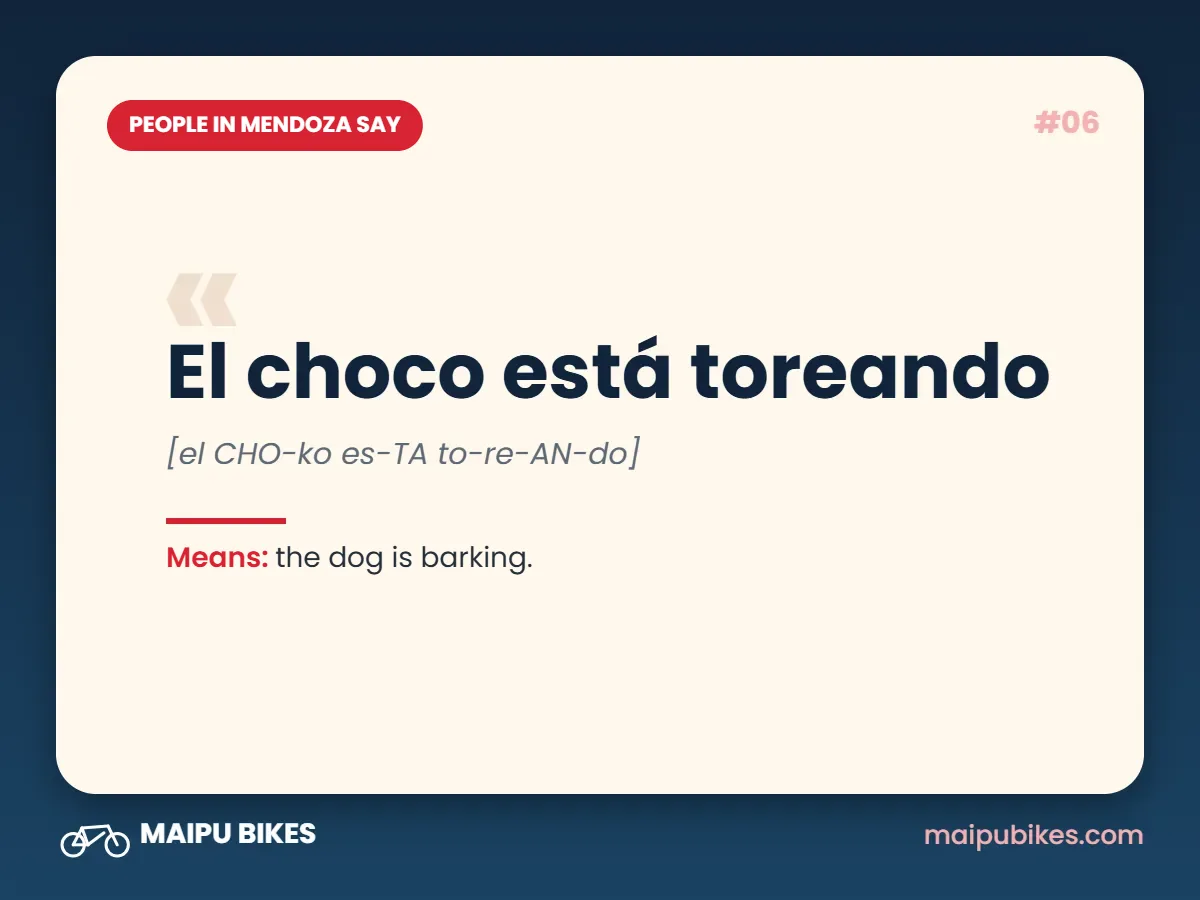
| «El choco está toreando» | The dog is barking. | In Spain and Mexico: «el perro está ladrando». |
| «Dejá de joder o te chumbo el choco» | Stop bothering me or I’ll set the dog on you. | In Spain: «deja de dar la lata». |
| «Seguí hasta donde topa y doblá a la derecha» | Go on until the street ends and then turn right. | In Spain: «sigue recto hasta el final y gira a la derecha». |
| «Donde topa lo pandito» | Where the flat land ends and the mountains begin. | There is no direct equivalent: in Spain they would say «donde empieza la sierra». |
| «Cayó piedra sin llover» | A joke for when someone nobody expected shows up. | In Spain: «¡mira quién apareció!». |
| «Me siento pachucho, debe ser por el Zonda» | I feel run-down, a bit unwell. | In Spain they also say «pachucho». |
Typical Mendoza phrases for taking it slow and joking around
| Phrase | What it means | How it’s said elsewhere in Spanish |
|---|---|---|
| «No me apuren, si me quieren sacar bueno» | If you rush me, it’ll turn out badly. | In Spain: «vísteme despacio, que tengo prisa». |
| «Mendocino pata ‘e rastra» | A nickname once given to people from Mendoza for their laid-back, unhurried way of doing things. | In Spain: «ir a paso de tortuga». |
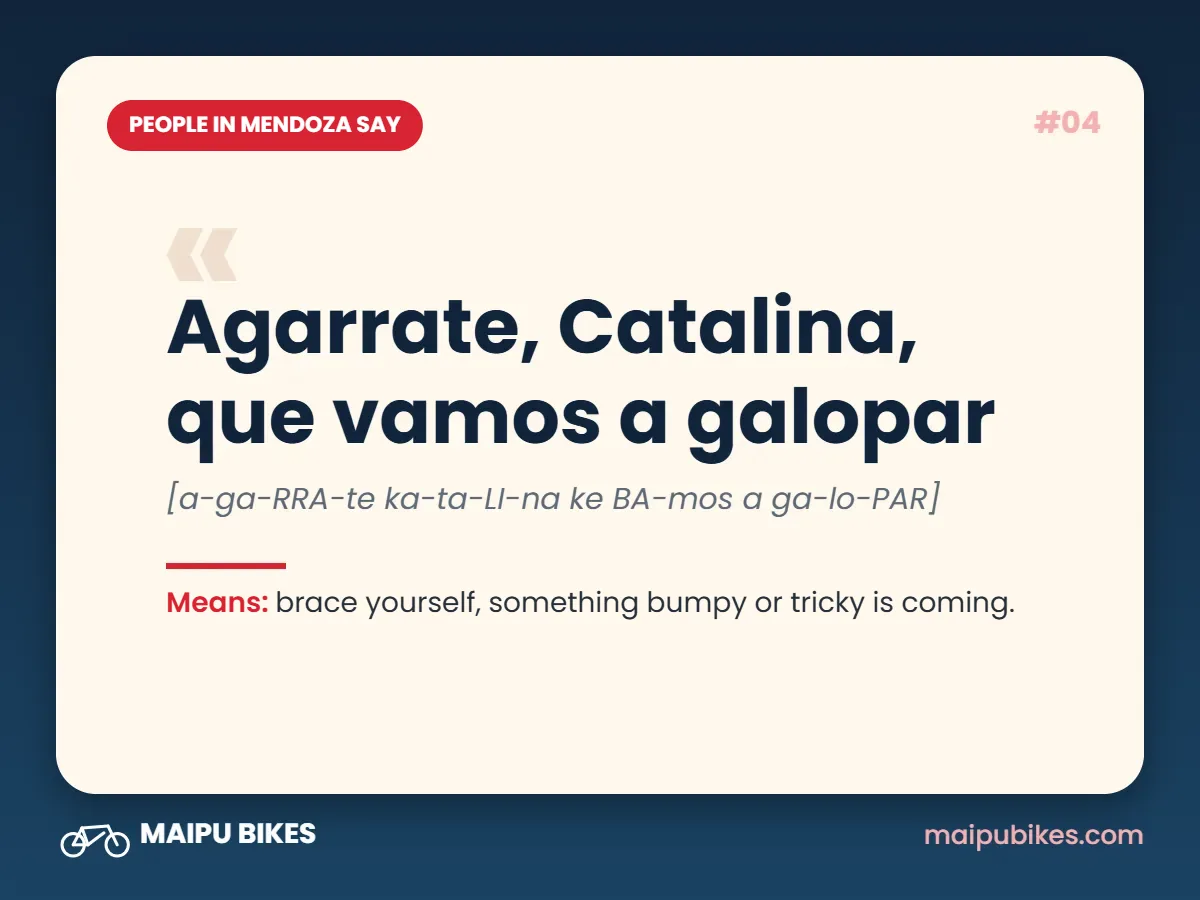
| «Agarrate, Catalina, que vamos a galopar» | Brace yourself, something bumpy or tricky is coming. | In Spain: «agárrate, que vienen curvas». |
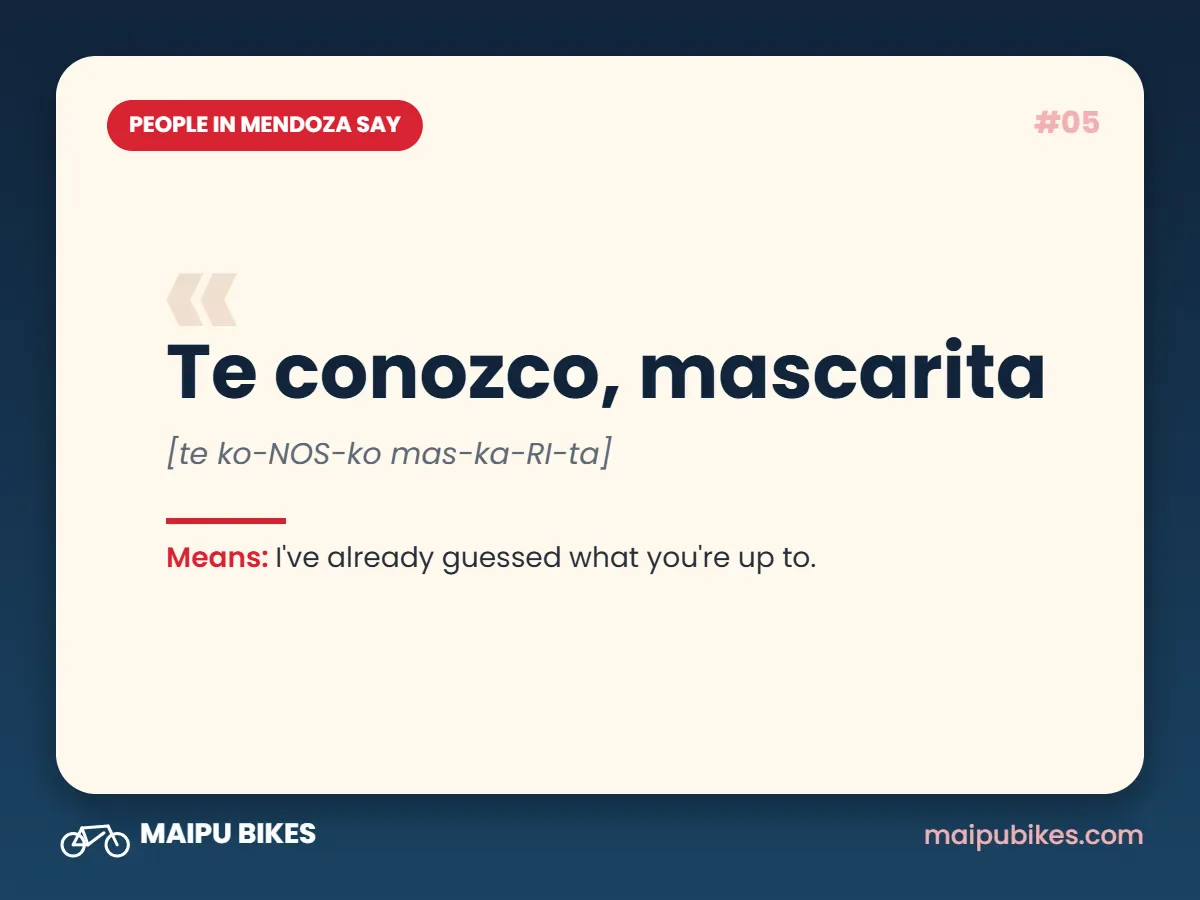
| «Te conozco, mascarita» | I’ve already guessed what you’re up to. | In Spain: «te conozco, bacalao, aunque vengas disfrazao». |
| «¡Pero si es un piojo resucitado!» | Said of someone who used to be unimportant and now acts important. | In Spain: «se le han subido los humos». |
| «Ya está meando fuera del tarro» | They’re going off topic or saying something irrelevant. | In Spain: «irse por los cerros de Úbeda». |
| «Andá a llorar al Calvario» | Used jokingly to brush off a complaint. | In Spain: «vete a llorar a otra parte». |
Typical Mendoza phrases you’ll hear at home
If you stay with a local family or at a hostel run by people from Mendoza, these typical Mendoza phrases are the first ones you’ll hear.
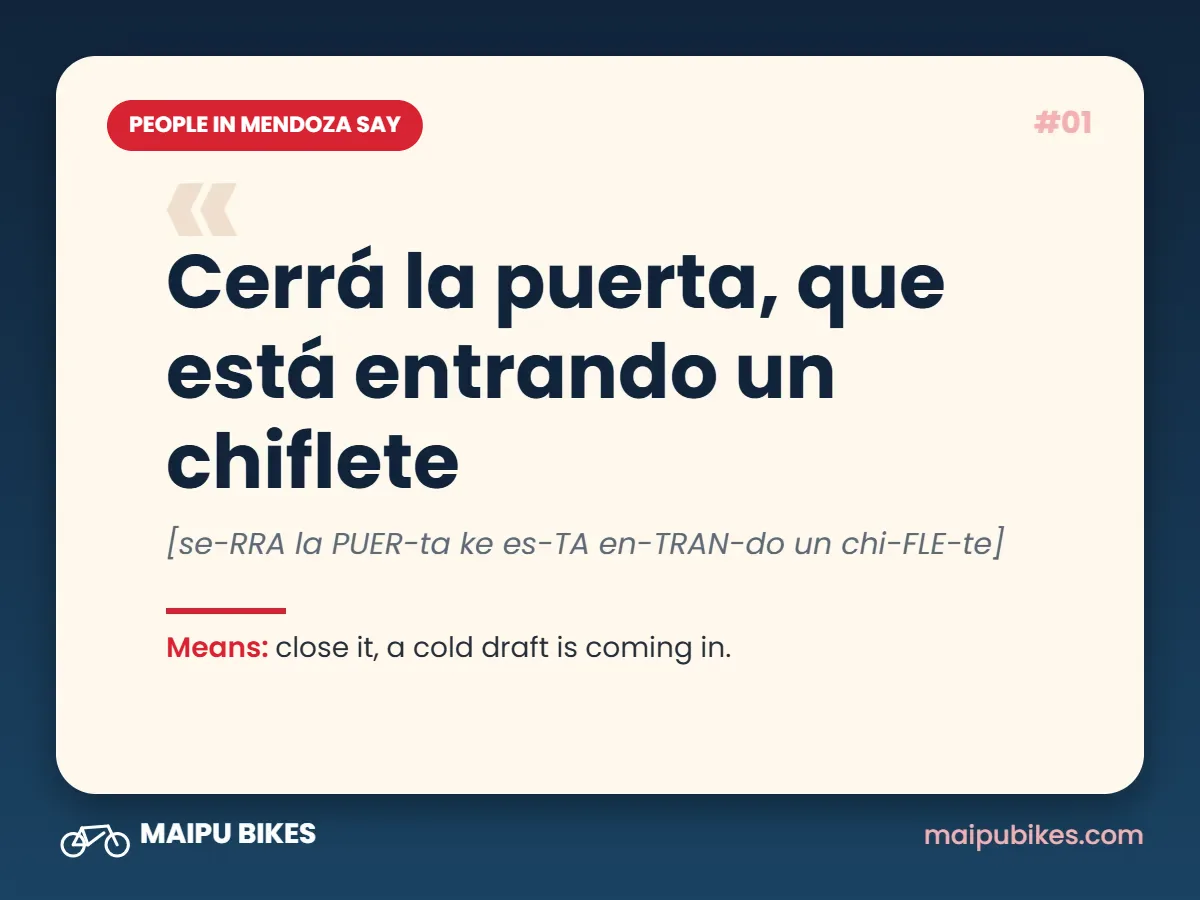
«Cerrá la puerta, que está entrando un chiflete» [se-RRA la PUER-ta ke es-TA en-TRAN-do un chi-FLE-te]
- What it means: Close the door, a cold draft is coming in.
- Elsewhere: In Spain: «está entrando corriente». In Mexico: «se mete un chiflón».
«Llevame a peteco» [ye-BA-me a pe-TE-ko]
- What it means: Carry me on your back. Someone who’s tired or has twisted an ankle asks for it.
- Elsewhere: In Spain and Mexico: «a caballito».
«El choco está toreando» [el CHO-ko es-TA to-re-AN-do]
- What it means: The dog is barking. «Choco» means dog and «torear», in Mendoza, means to bark. It’s one of the most common typical Mendoza phrases.
- Elsewhere: In Spain and Mexico: «el perro está ladrando».
«Dejá de joder o te chumbo el choco» [de-JA de jo-DER o te CHUM-bo el CHO-ko]
- What it means: Stop bothering me or I’ll set the dog on you. It’s said jokingly and it’s informal: better to recognize it than to use it.
- Elsewhere: In Spain: «deja de dar la lata». In Mexico: «ya deja de molestar».
Typical Mendoza phrases for finding your way
When you ask for directions, the answer may come with one of these typical Mendoza phrases.
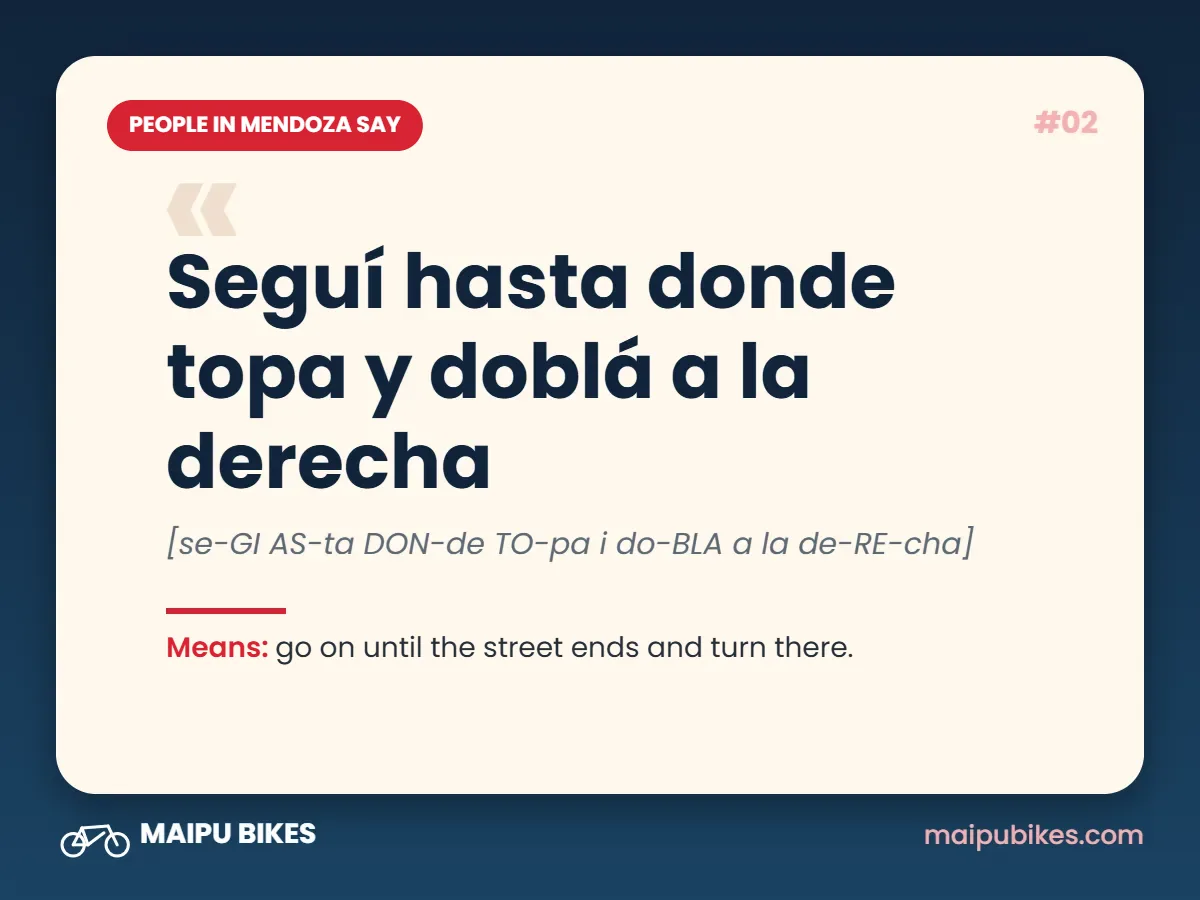
«Seguí hasta donde topa y doblá a la derecha» [se-GI AS-ta DON-de TO-pa i do-BLA a la de-RE-cha]
- What it means: Go on until the street ends and then turn right.
- Elsewhere: In Spain: «sigue recto hasta el final y gira a la derecha». In Mexico: «sigue derecho hasta donde termina y da vuelta a la derecha».
«Donde topa lo pandito» [DON-de TO-pa lo pan-DI-to]
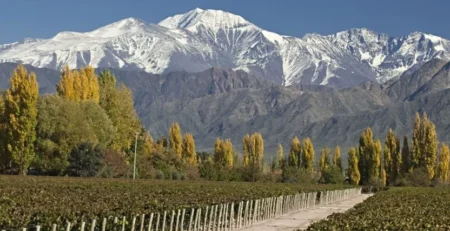
- What it means: Where the flat land ends and the mountains begin.
- Elsewhere: There is no direct equivalent: in Spain they would say «donde empieza la sierra».
Hail and the Zonda wind have their own phrases too
In a province that lives off wine, the weather comes up in conversation every day, which is why it appears in so many typical Mendoza phrases.
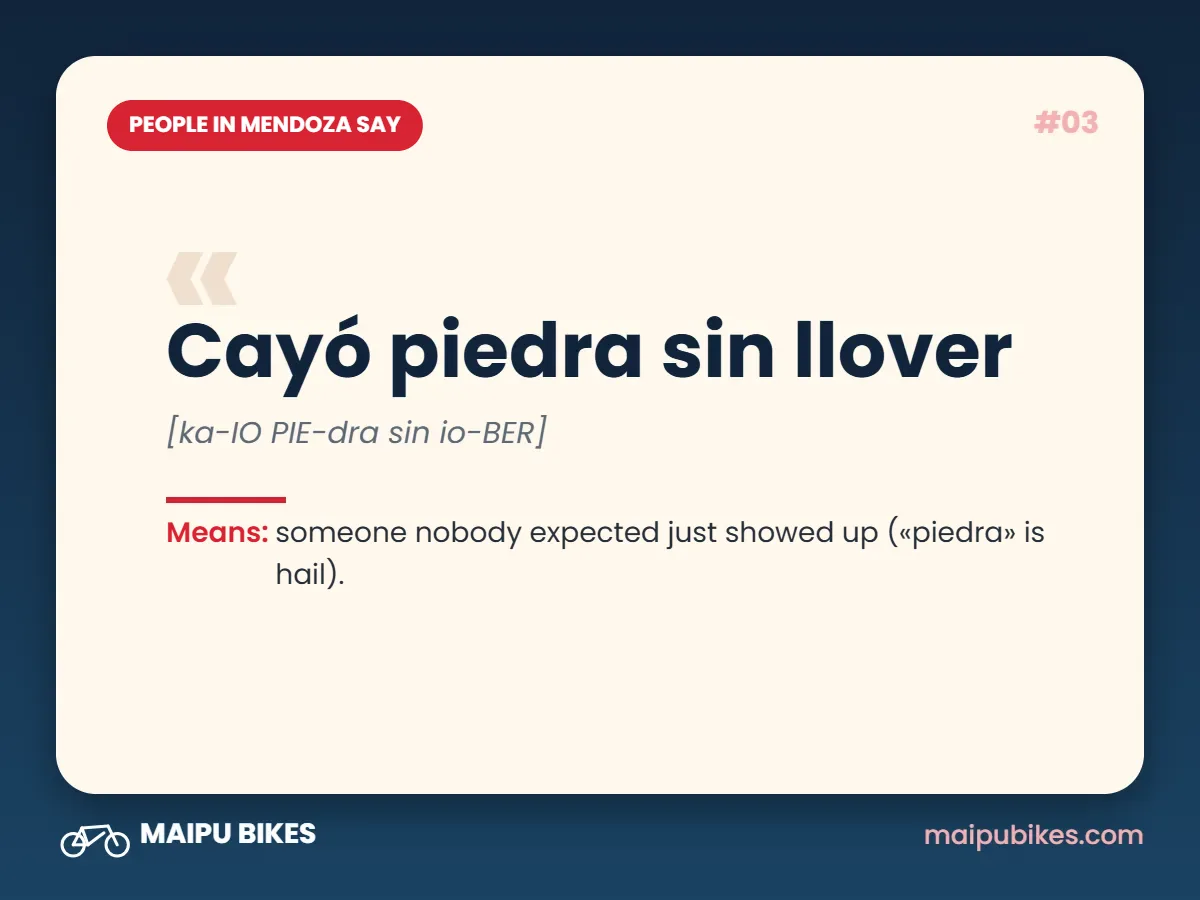
«Cayó piedra sin llover» [ka-IO PIE-dra sin io-BER]
- What it means: A joke for when someone nobody expected shows up. «Piedra» (stone) means hail, the biggest fear of Mendoza’s grape growers.
- Elsewhere: In Spain: «¡mira quién apareció!». In Mexico: «¡miren nada más quién llegó!».
«Me siento pachucho, debe ser por el Zonda» [me SIEN-to pa-CHU-cho DE-be ser por el SON-da]
- What it means: I feel run-down, a bit unwell. The Zonda is Mendoza’s hot, dry wind, and many people blame it when they feel under the weather.
- Elsewhere: In Spain they also say «pachucho». In Mexico: «ando malito».
Phrases for when there’s no rush (and when there is)
Mendoza’s calm has its own vocabulary, and you’ll find it in the typical Mendoza phrases too.
«No me apuren, si me quieren sacar bueno» [no me a-PU-ren si me KIE-ren sa-KAR BUE-no]
- What it means: If you rush me, it’ll turn out badly. It’s said to someone who’s impatient.
- Elsewhere: In Spain: «vísteme despacio, que tengo prisa». In Mexico: «sin prisa, pero sin pausa».
«Mendocino pata ‘e rastra» [men-do-SI-no PA-ta e RRAS-tra]
- What it means: A nickname once given to people from Mendoza for their «pachorra», their laid-back, unhurried way of doing things.
- Elsewhere: In Spain: «ir a paso de tortuga».
«Agarrate, Catalina, que vamos a galopar» [a-ga-RRA-te ka-ta-LI-na ke BA-mos a ga-lo-PAR]
- What it means: Brace yourself, something bumpy or tricky is coming. It’s a warning, almost always a joking one.
- Elsewhere: In Spain: «agárrate, que vienen curvas». In Mexico: «agárrate, que ahí viene lo bueno».
Typical Mendoza phrases for joking around
These typical Mendoza phrases come up among friends, almost always as a joke.
«Te conozco, mascarita» [te ko-NOS-ko mas-ka-RI-ta]
- What it means: I’ve already guessed what you’re up to. It comes from carnival masks, which let people play pranks without being recognized.
- Elsewhere: In Spain: «te conozco, bacalao, aunque vengas disfrazao».
«¡Pero si es un piojo resucitado!» [PE-ro si es un PIO-jo rre-su-si-TA-do]
- What it means: Said of someone who used to be unimportant and now acts important.
- Elsewhere: In Spain: «se le han subido los humos».
«Ya está meando fuera del tarro» [ia es-TA me-AN-do FUE-ra del TA-rro]
- What it means: They’re going off topic or saying something irrelevant. It’s informal.
- Elsewhere: In Spain: «irse por los cerros de Úbeda».
«Andá a llorar al Calvario» [an-DA a io-RAR al kal-BA-rio]
- What it means: Used jokingly to brush off a complaint. It refers to El Calvario at the La Carrodilla parish church, in Luján de Cuyo.
- Elsewhere: In Spain: «vete a llorar a otra parte».
Typical Mendoza phrases on the Wine Route
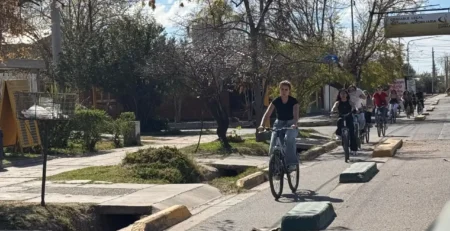
On the Maipú circuit you’ll come across neighbors, winery staff and other travelers. If someone tells you «seguí hasta donde topa», you’ll know the street ends further ahead. And if they warn you that «el choco está toreando», it’s just a dog barking: carry on calmly along the bike lane.
Maipú is a town with a wine-growing area: the circuit combines bike lanes and streets with traffic, so it’s best to ride carefully. For the details, read our article on whether it’s safe to cycle between wineries.
A phrase you don’t understand? Ask «¿Qué significa?» (What does it mean?). People from Mendoza enjoy explaining the way they speak, and in the Dictionary of the Spanish Language you’ll also find some of them, such as «pachucho».
Frequently asked questions about typical Mendoza phrases
What does «chiflete» mean in Mendoza?
It’s a cold draft. «Cerrá la puerta, que está entrando un chiflete» means cold air is coming in.
What does «cayó piedra sin llover» mean?
It’s a joke for when someone nobody expected shows up. «Piedra» means hail.
What is «llevar a peteco»?
Carrying someone on your back. In Spain and Mexico they say «a caballito».
Do I have to use these phrases to be understood?
No. Recognizing them is enough; if you don’t understand one, ask what it means.
Read also
Hear typical Mendoza phrases on the Wine Route
Choose how to explore the Maipú wineries: on your own or with an itinerary we put together.
Self-Guided Wine Bike Tour
Self-guided rental
Bike, helmet, map and mechanical assistance. You choose your stops within the Maipu Bikes circuit and, if any of them needs a booking, we send you the link. Tastings and meals are paid separately. When you get back, the Free Malbec Wine Happy Hour is waiting for you.
Maipu Wine Bike Experience
Itinerary with coordinated bookings
You follow a timed itinerary and we coordinate the bookings: Trapiche, Entre Olivos, Viña El Cerno and a multi-course lunch at Mevi. Bike, helmet and assistance included. At the end, the Free Malbec Wine Happy Hour.





Deja una respuesta